Categories
Blog

How to Optimize Your Website for Search Engines in 2026

In 2026, businesses must continuously optimize website for search engines visibility to stay ahead in the competitive digital world. Search engines are smarter than ever, focusing on user experience, helpful content, website speed, mobile responsiveness, and AI-driven search intent. Companies that adapt to these changing SEO trends can improve rankings, increase traffic, and generate better leads.

Whether you own a startup, eCommerce store, or service-based company, having a properly optimized website is essential for online success. At Bytelabz, we help businesses build SEO-friendly websites that improve visibility and conversions.

Why SEO Still Matters in 2026

Search Engine Optimization is still one of the highest-ROI digital marketing platforms. Unlike paid advertising, which stops the moment your budget runs out, SEO builds compounding organic visibility over time.

Modern search engines evaluate far more than keywords. Google’s 2025–26 ranking systems assess:

  • Website loading speed (LCP, INP, CLS — more on these below)
  • Mobile responsiveness (mobile-first indexing has been default since 2019)
  • Content quality and authoritativeness (E-E-A-T signals)
  • User engagement (dwell time, click-through rate, bounce rate)
  • AI relevance (how well your content serves as a source for AI Overviews)
  • Structured data (schema markup that helps Google understand your content)
  • Secure browsing (HTTPS is table stakes, not a differentiator)
  • Entity signals (your brand’s presence in Google’s Knowledge Graph)

Businesses that treat SEO as a one-time setup — rather than a continuous discipline — tend to lose ground after major updates. Google ran three significant Core Updates between March 2025 and March 2026, each reinforcing the same direction: reward genuine expertise, penalize thin or scaled content.

Businesses that fail to adapt may lose visibility in search results. This is why businesses must continually optimize website for search engines performance utilizing updated SEO methods.

Focus on User Intent and Helpful Content

Google and AI-powered search systems prioritize content that directly answers user queries. Instead of keyword stuffing, businesses should focus on creating informative and valuable content.

Tips for Better Content Optimization

  • Write clear and engaging content
  • Solve user problems
  • Use natural keywords
  • Add FAQs
  • Update old blogs regularly
  • Use headings properly
  • Include visuals and infographics

For example, if someone searches for “best SEO company in Kerala,” your content should provide detailed information, services, pricing insights, and customer trust signals.

At Bytelabz Services, businesses can find professional SEO, web development, and digital marketing solutions tailored for modern search engines.

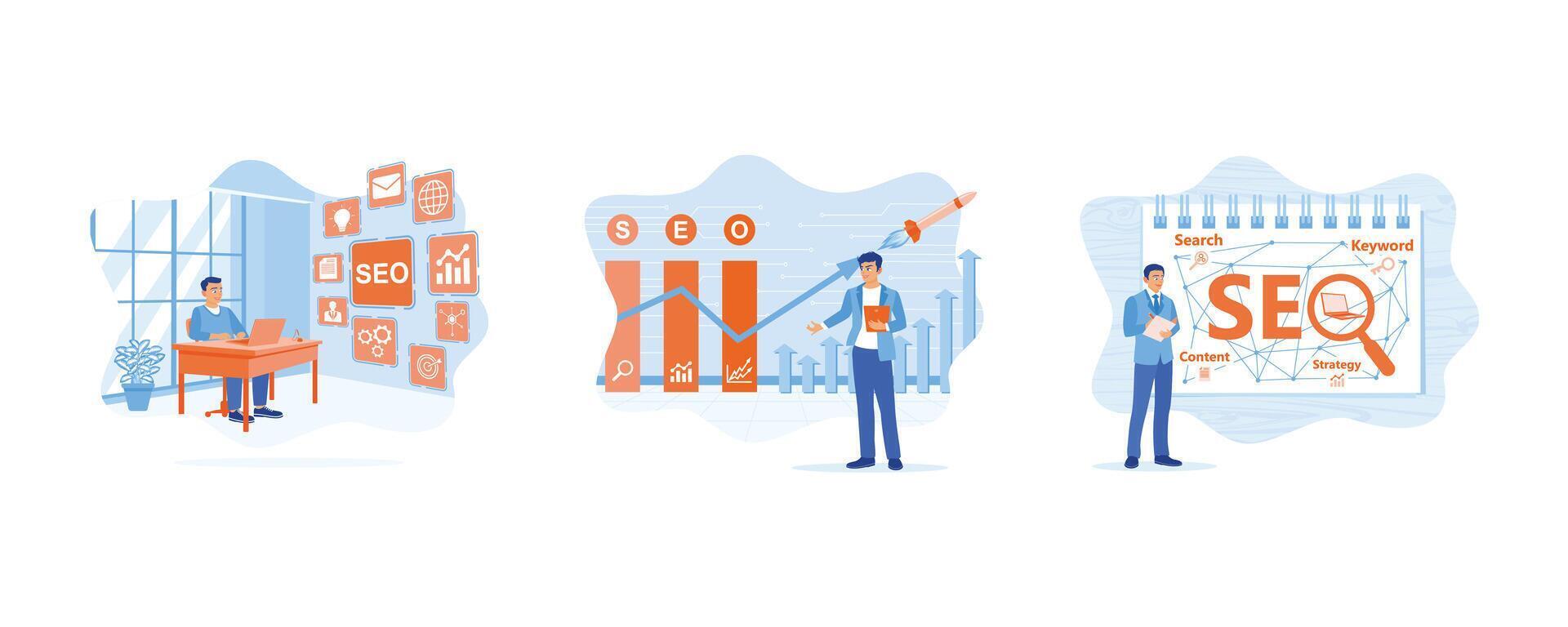
SEO optimization poster showing website search engine strategies for 2026 with keyword research, link building, technical SEO, and website performance elements by Bytelabz.

Improve Website Speed and Core Web Vitals

Website speed is a confirmed ranking factor, and Google’s Core Web Vitals are the specific measurements that determine whether your page is “fast enough.” Here are the three current metrics and their thresholds — note that FID (First Input Delay) was retired in March 2024 and replaced by INP:

Metric What it measures Good threshold
LCP (Largest Contentful Paint) How fast the main content loads Under 2.5 seconds
INP (Interaction to Next Paint) How quickly the page responds to user input Under 200ms
CLS (Cumulative Layout Shift) Whether page elements jump around during load Under 0.1

Test your site free at PageSpeed Insights and check real-user field data in Google Search Console under Core Web Vitals.Lab ratings alone are not adequate – field data from real Chrome users is what Google utilizes for ranking. 

From our audits: Most Kerala SME websites fail INP first. The most common culprit is JavaScript-heavy themes (particularly WooCommerce stores with multiple tracking scripts loading synchronously). Deferring non-critical scripts typically improves INP by 40–80ms.

Technical fixes that move the needle:

  • Compress and convert images to WebP or AVIF format (reduces LCP significantly)
  • Use a lightweight theme — avoid page builders with excessive DOM size
  • Minify CSS and JavaScript; defer render-blocking scripts
  • Enable browser caching with appropriate cache headers
  • Use a CDN (Content Delivery Network) to offer materials from the servers nearer to your users
  • Target TTFB (Time to First Byte) under 600ms — this reflects your hosting and server response quality; upgrade hosting if you’re on shared servers

Mobile Optimization is Mandatory

More than 70% of consumers now visit websites via mobile devices. Search engines primarily use mobile-first indexing, meaning your mobile website version matters the most.

Important Mobile SEO Practices

  • Responsive web design
  • Fast mobile loading speed
  • Easy navigation
  • Clickable buttons
  • Optimized font sizes
  • Mobile-friendly content layout

A well-designed website can greatly enhance engagement as well as conversions. Bytelabz Web Designing helps businesses create modern, responsive websites optimized for all devices.

Use AI-Friendly SEO Strategies

AI-powered search is changing the SEO landscape in 2026. Search engines now understand context, semantics, and user behavior better than before.

AI SEO Optimization Tips

  • Use conversational content
  • Target long-tail keywords
  • Add structured data
  • Optimize for voice search
  • Create topical authority
  • Build content clusters

Instead of writing only for search engines, create content that genuinely helps users. This improves trust, engagement, and rankings.

Businesses aiming to optimize website for search engines visibility should also focus on featured snippets and AI-generated search summaries.

Technical SEO is More Important Than Ever

Technical SEO ensures search engines can properly crawl and index your website.

Essential Technical SEO Checklist

  • XML sitemap submission
  • HTTPS security
  • Proper robots.txt configuration
  • Fix broken links
  • Canonical tags
  • Schema markup
  • Clean URL structure
  • Internal linking strategy

A technically optimized website improves crawling efficiency and ranking performance.

You can also explore Bytelabz Web Development services for customized SEO-friendly website development.

Build High-Quality Backlinks

Backlinks remain a strong ranking signal in 2026. However, quality matters more than quantity.

Best Backlink Strategies

  • Guest posting
  • Local business listings
  • PR outreach
  • Industry directories
  • Content marketing
  • Shareable infographics
  • Partner collaborations

Avoid spammy backlink practices because modern search engines can easily identify manipulative SEO tactics.

Instead, focus on building authority and trust naturally.

Optimize Local SEO for Better Visibility

Local SEO is essential for businesses targeting nearby customers.

Local SEO Optimization Tips

  • Create Google Business Profile
  • Use local keywords
  • Add business schema
  • Collect customer reviews
  • Optimize location pages
  • Maintain NAP consistency

For example, businesses in Kerala can target keywords like:

  • SEO company in Trivandrum
  • Web design company in Kerala
  • Digital marketing agency in Kochi

At Bytelabz About Us, businesses can learn more about the company’s expertise in web design, SEO, and digital growth solutions.

Why Choose Bytelabz for SEO and Web Solutions?

Bytelabz is a full-service web design and development firm providing high-quality SEO, digital marketing, and branding services solutions.

Why Businesses Choose Bytelabz

  • Experienced SEO professionals
  • Custom web development solutions
  • Modern responsive designs
  • Result-oriented digital marketing
  • White-hat SEO strategies
  • Client-focused approach
  • End-to-end online growth support

Bytelabz Solutions is committed to helping businesses grow through innovative technology and effective digital strategies. From website development to SEO optimization, the company delivers tailored solutions that improve online visibility and business performance.

Frequently Asked Questions

1. What is the best way to optimize a website for search engines in 2026?
The highest-impact combination is: genuine E-E-A-T signals (a real author with verifiable expertise, cited sources, first-hand experience), Core Web Vitals compliance (LCP under 2.5s, INP under 200ms, CLS under 0.1), mobile-first design, structured data markup, and content that directly and completely answers user queries. Technical hygiene — clean URLs, proper canonicalization, XML sitemap, no broken links — is the foundation everything else rests on. For most businesses, fixing technical issues and improving content depth delivers faster results than link building.

2. Why is mobile optimization important for SEO?

Google uses mobile-first indexing, meaning it primarily crawls and evaluates your mobile site — not your desktop version. If your mobile site is slower, shows less content, or has poor usability (small tap targets, horizontal scrolling, tiny fonts), your rankings suffer regardless of how good your desktop site is. With mobile devices accounting for over 63% of global web traffic (Statcounter, Q4 2025), mobile optimization is also directly tied to user experience, conversion rates, and time-on-site — all signals Google monitors.

3. Does website speed affect SEO rankings?

Yes — Google confirmed page speed as a ranking factor in 2010, and its weight has increased with every Core Web Vitals update since. Practically: a page that meets the “Good” thresholds for LCP, INP, and CLS can earn the Core Web Vitals badge in Search Console and may receive preferential treatment in ranking. Beyond rankings, speed impacts business results directly: a one-second buffer in load time decreases conversions by an average rate of 7% (Akamai, 2024). Test your site at PageSpeed Insights and check real-user field data in Search Console — lab scores and field data often differ significantly.

4. What is INP and why does it matter for SEO?

INP (Interaction to Next Paint) switched FID (First Input Delay) as a Core Web Vital in March 2024. It measures how quickly your page responds to user interactions — clicks, taps, keyboard input — from the moment the user acts to the moment the browser visually updates. The “Good” threshold is under 200ms. Pages that exceed 500ms are classified as “Poor” and face ranking disadvantages. INP is particularly relevant for JavaScript-heavy sites: every script that runs on the main thread during user interaction adds to INP. Common fixes include deferring non-critical scripts, reducing JavaScript bundle size, and using web workers for heavy computations.

5. Why choose Bytelabz for SEO services?

Bytelabz has audited and optimized websites for 80+ businesses across Kerala, with documented ranking improvements across competitive verticals including legal services, healthcare, retail, and technology. We apply current best practices — not templated strategies from two years ago — and provide transparent monthly reporting on metrics that matter. Contact us to request a free technical audit of your site.

Conclusion

SEO in 2026 is no longer only about keywords. Businesses must focus on user experience, AI-friendly content, technical optimization, mobile responsiveness, and high-quality engagement strategies.

Companies that continuously optimize website for search engines performance can improve visibility, attract qualified traffic, and increase conversions. Working with experienced professionals like Bytelabz ensures your website stays updated with the latest SEO trends and delivers measurable business growth.

Categories
Blog

What AI Sees When It Visits Your Website & How to Fix It?

Have you ever wondered what AI sees when it visits your website? Many website owners focus on design, colors, and user experience—but search engines and AI systems don’t see your website the same way humans do.

Understanding what AI sees when it visits your website is one of the most important factors in improving your SEO, increasing traffic, and ranking higher on Google.

AI systems like Googlebot, Bing AI, and other crawlers scan your website to understand its content, structure, and relevance. If your website is not optimized for what AI sees when it visits your website, your chances of ranking drop significantly.

What Does AI See When It Visits Your Website?

To truly optimize your site, you must first understand what AI sees when it visits your website.

AI does not “see”:

  • Colors
  • Visual design
  • Animations

Instead, it analyzes:

  • HTML structure
  • Text content
  • Keywords
  • Meta tags
  • Internal links
  • Page speed
  • Mobile responsiveness
  • Schema markup

This means your website should be built for both users and AI systems.

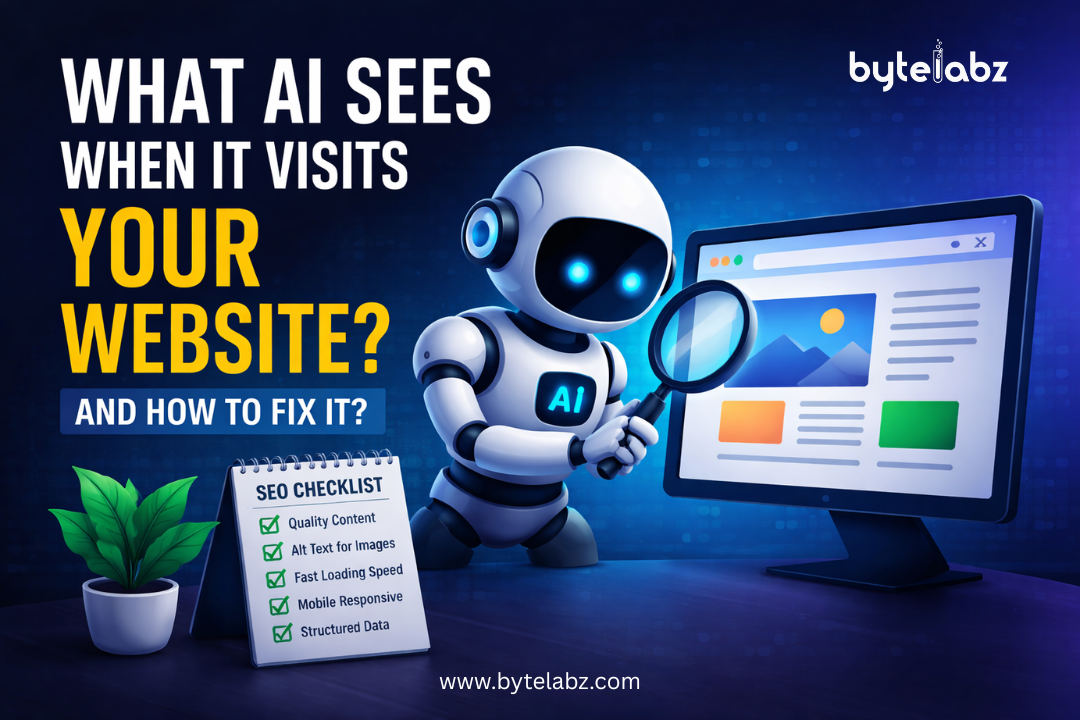
What AI sees when it visits your website SEO illustration

Human vs AI View of a Website
Feature Human View AI View
Images Visual and attractive Needs ALT text to understand
Design Colors, layout, UI/UX Mostly ignored
Content Readable text Keyword relevance & structure
Navigation Easy menus Internal linking structure
Speed Slight delay is okay Ranking factor
Mobile Friendly Comfort Critical ranking signal
Why Understanding What AI Sees Matters

If you ignore what AI sees when it visits your website, your site may:

  • Not get indexed properly
  • Rank lower on Google
  • Lose organic traffic
  • Perform worse than competitors

Search engines rely on AI to decide which websites deserve top positions. That’s why optimizing this is essential for business growth.

Common Issues AI Finds on Websites

1. Missing or Poor Content

AI looks for clear, keyword-rich content. Thin or duplicate content confuses it.

Fix: Write detailed, unique content targeting your focus key phrase.

2. No ALT Text for Images

AI relies on ALT text to understand images.

Fix: Add ALT text like:
alt="web design development company in trivandrum"

3. Broken Internal Links

AI uses links to crawl your site.

Fix: Regularly audit links and connect related pages.

4. Slow Website Speed

AI prioritizes fast-loading websites.

  • Compress images
  • Use caching
  • Optimize code

5. Poor Mobile Optimization

Most users are mobile-based — AI prioritizes mobile-first indexing.

6. Missing Meta Tags

Meta tags are essential ranking signals.

7. No Structured Data (Schema)

Schema helps AI understand your content context.

  • FAQ schema
  • Business schema
  • Review schema
How to Fix Your Website for AI (Step-by-Step)

Step 1: Optimize Content

  • Use your focus key phrase naturally
  • Add headings (H1, H2, H3)
  • Write at least 1000+ words

Step 2: Improve Technical SEO

  • Fix broken links
  • Submit sitemap
  • Use clean URLs

Step 3: Add Internal Linking

Example: Homepage → Services → Contact

Step 4: Optimize Images

  • Compress images
  • Add descriptive ALT text
  • Use WebP format

Step 5: Improve Page Speed

Step 6: Make Your Website Mobile-Friendly

  • Use Google Mobile-Friendly Test
Advanced Tips
  • Use long-tail keywords
  • Maintain consistent blogging
  • Add breadcrumb navigation
  • Use internal anchor links
  • Avoid duplicate content
Conclusion

AI is the gatekeeper of your website’s visibility. If it cannot properly read and understand your content, your rankings will suffer—no matter how beautiful your website looks.

By focusing on content quality, structure, speed, and technical SEO, you can ensure that AI understands your website and ranks it higher.

FAQ

1. Does AI see images on my website?

No, AI understands images through ALT text and file names.

2. Why is my website not indexing on Google?

It could be due to poor content, missing sitemap, or crawl issues.

3. How often does AI visit my website?

Depends on your updates and authority.

4. What is the most important SEO factor?

Content quality, keyword relevance, and structure.

5. Can a slow website affect rankings?

Yes, page speed is a major ranking factor.

6. What tools can I use?

Categories
Blog

Google Search Results in 2026: New Features & SEO Strategies

The digital landscape is constantly evolving, and Google search results in 2026 are more advanced, intelligent, and user-focused than ever before. With the integration of artificial intelligence, enhanced search intent recognition, and dynamic result formats, Google is no longer just a search engine—it’s an answer engine.

For businesses and website owners, this shift presents both challenges and opportunities. Traditional SEO practices like keyword optimization and backlink building still matter, but they are no longer enough on their own. To succeed in 2026, brands must adopt a more strategic, user-centric approach.

At Bytelabz, we help businesses stay ahead of evolving SEO trends by implementing modern, data-driven strategies that align with Google’s latest algorithm updates.

The Evolution of Google Search Results

Over the past few years, Google has transitioned from displaying simple blue links to offering highly interactive and informative search results. In 2026, this evolution has reached a new level with AI-powered experiences and rich SERP features dominating the page.

Google now prioritizes:

  • Context over keywords
  • User intent over exact match queries
  • Experience and authority over basic content

This means websites must provide real value, depth, and clarity to rank effectively.

Key Features of Google Search Results in 2026

AI-Powered Search Overviews

One of the most significant changes in Google search results in 2026 is the introduction of AI-generated summaries at the top of SERPs. These summaries pull information from multiple sources to provide users with quick, accurate answers.

To appear in these results, your content must be:

  • Well-structured with clear headings
  • Factually accurate and authoritative
  • Easy to understand and informative

Featured Snippets and Answer Boxes

Featured snippets continue to dominate search results by providing direct answers to user queries. These appear above organic listings and significantly improve visibility.

To optimize for snippets:

  • Answer questions directly within 40–60 words
  • Use bullet points or numbered lists
  • Include relevant keywords naturally

People Also Ask (PAA) Expansion

The “People Also Ask” section has become more dynamic in 2026, offering deeper insights into related queries. This feature reflects Google’s focus on user intent and topic depth.

Including FAQ sections in your content helps:

  • Improve SERP visibility
  • Capture long-tail keyword traffic
  • Increase user engagement

Visual and Video Search Integration

Visual content is playing a bigger role than ever. Google now prioritizes video results, image packs, and interactive media.

To stay competitive:

  • Use high-quality images with optimized alt text
  • Embed relevant videos
  • Create engaging visual content

Local and Personalized Search Results

Local SEO has become more refined, with Google delivering highly personalized results based on user location and behavior.

For businesses targeting local audiences:

  • Optimize your Google Business Profile
  • Use location-based keywords
  • Maintain consistent business information

SEO Strategies to Rank in 2026

1. Create High-Quality, Intent-Focused Content

Content remains the foundation of SEO, but in 2026, it must align perfectly with user intent. Instead of writing generic articles, focus on solving specific problems.

In this case, rather than focusing on “SEO tips,” develop content such as:

  • “SEO strategies for small businesses in 2026”
  • “How to optimize for AI search results”

2. Optimize Content Structure for SERP Features

Proper content structure is essential for ranking in modern search results.

Best practices include:

  • Using clear H1, H2, and H3 headings
  • Adding bullet points and short paragraphs
  • Including FAQ sections

This increases the possibility of appearing in featured snippets and enhances readability.

3. Focus on Technical SEO and Performance

In 2026, technical SEO is more crucial than ever. Google prioritizes websites that are fast, secure, and mobile-friendly.

Key factors include:

  • Page speed optimization
  • Mobile responsiveness
  • Secure HTTPS connection
  • Clean website architecture

A technically optimized website ensures better crawling, indexing, and ranking.

4. Build Authority and Trust 

Experience, Expertise, Authoritativeness, and Trustworthiness (E-E-A-T) are the criteria Google uses to assess content.

To improve credibility:

  • Add author information
  • Include real-world examples
  • Showcase testimonials and case studies


Aspect Traditional SEO SEO in 2026
Keyword Usage Exact match focus Intent-based keywords
Content Style Basic and keyword-heavy In-depth and user-focused
SERP Features Blue links only AI, snippets, videos, PAA
User Experience Secondary factor Primary ranking factor
Optimization Focus Rankings Visibility + Engagement

How Businesses Can Stay Ahead

To succeed in Google search results in 2026, businesses must adopt a proactive approach:

  • Continuously update content
  • Monitor SEO performance
  • Adapt to algorithm changes
  • Invest in professional SEO services

Partnering with experts like Bytelabz ensures your business stays competitive in a rapidly changing digital environment.

Looking to improve your website’s visibility in Google search results in 2026? Our team is here to help you with expert SEO strategies, web development, and digital growth solutions tailored to your business needs.

Conclusion

The transformation of Google search results in 2026 highlights the growing importance of AI, user experience, and high-quality content. SEO is no longer just about ranking—it’s about delivering value, building trust, and creating meaningful user experiences.

By implementing modern SEO strategies and staying updated with the latest trends, businesses can achieve sustainable growth and long-term success.

FAQs

1. What are Google search results in 2026?

They are advanced search results that include AI-generated summaries, featured snippets, and personalized content designed to deliver faster and more accurate answers.

2. How can I improve my website ranking in 2026?

Focus on high-quality content, optimize for user intent, improve technical SEO, and use strong internal linking strategies.

3. Why is AI important in SEO?

AI helps Google understand content better and deliver more relevant results, making structured and informative content essential.

4. Are backlinks still important in 2026?

Yes, but quality matters more than quantity. Authoritative and relevant backlinks improve trust and rankings.

5. How does Bytelabz help with SEO?

Bytelabz provides expert SEO services, including content optimization, technical SEO, and strategy development to help businesses rank higher in search results.

Categories
Blog

What Makes a Website Truly Stand Out in 2026?

In today’s fast-evolving digital world, having a website is no longer enough. In 2026, businesses need websites that not only look good but also perform exceptionally well. A truly outstanding website is one that captures attention, builds trust, and drives real results.

With increasing competition and smarter users, the standards for web design have changed dramatically. Businesses are now turning to experts like Bytelabz to create high-performing, user-focused digital experiences that stand out.

Let’s explore what really makes a website stand out in 2026.

1. User-Centric Design is Everything

Modern websites are no longer built for businesses—they are built for users. A successful website focuses on user experience (UX), ensuring visitors can easily navigate, understand, and interact with the content.

A clean layout, intuitive navigation, and clear call-to-actions (CTAs) make a huge difference. When users land on your website, they should instantly know:

  • Who you are
  • What you offer
  • What they should do next

Companies like Web Designers Trivandrum understand that simplicity and usability are key elements in modern web design.

2. Mobile-First and Responsive Design

In 2026, more than ever, users access websites through mobile devices. A website that doesn’t perform well on smartphones is likely to lose a significant portion of its audience.

Responsive design ensures your website:

  • Adapts to all screen sizes
  • Loads quickly on mobile
  • Maintains usability across devices

Professional agencies such as Bytelabz prioritize mobile-first design, ensuring every website works seamlessly on all devices.

Learn more about mobile-first design from Google.

3. Speed and Performance Matter More Than Design

If a website loads slowly, its beauty is meaningless. In fact, users in 2026 expect websites to load within seconds—or they leave.

Fast-loading websites:

  • Improve user experience
  • Reduce bounce rates
  • Increase conversions
  • Help with SEO rankings

Modern web development focuses heavily on performance optimization. Techniques like image compression, clean coding, and efficient hosting are essential to ensure lightning-fast loading speeds.

You can test your website speed using: Pagespeed.

4. Custom Design Over Templates

One of the biggest trends in 2026 is the shift from template-based websites to fully custom designs. Businesses want unique digital identities that reflect their brand.

Custom websites:

  • Stand out from competitors
  • Offer better scalability
  • Provide tailored user experiences

Companies offering Custom Web Application Development Company Trivandrum services focus on building websites from scratch instead of relying on generic templates. This approach ensures better performance and uniqueness.

5. SEO-Friendly Structure

A website cannot stand out if it cannot be found. SEO (Search Engine Optimization) plays a critical role in making your website visible on search engines.

An SEO-friendly website includes:

  • Proper heading structure
  • Optimized images
  • Fast loading speed
  • Mobile responsiveness
  • Clean URL structure

Modern web design companies integrate SEO from the beginning, ensuring that the website is not just visually appealing but also ranks well on Google.

6. AI and Smart Features Integration

Artificial Intelligence is shaping the future of web design. In 2026, websites are becoming smarter and more interactive.

Key AI-driven features include:

  • Chatbots for instant support
  • Personalized user experiences
  • Smart recommendations
  • Voice search optimization

Businesses that adopt AI features are able to provide better engagement and customer satisfaction.

7. Strong Visual Storytelling

Websites in 2026 are no longer just informational—they are storytelling platforms. Visual elements such as images, videos, animations, and micro-interactions play a crucial role.

A strong visual design:

  • Captures attention instantly
  • Builds emotional connection
  • Improves engagement

Professional designers focus on combining creativity with strategy to deliver impactful storytelling through design.

8. Security and Trust Signals

With increasing cyber threats, users are more cautious than ever. A trustworthy website must ensure security and credibility.

Important trust factors include:

  • SSL certificates (HTTPS)
  • Secure payment gateways
  • Privacy policies
  • Authentic testimonials

A secure website builds confidence and encourages users to take action.

9. Conversion-Focused Design

A standout website is not just about traffic—it’s about results. Whether it’s generating leads, sales, or inquiries, the design should guide users toward conversion.

Key elements include:

  • Clear CTAs
  • Landing pages
  • Easy contact forms
  • Minimal distractions

Companies like Bytelabz Software Solutions focus on designing websites that not only attract visitors but also convert them into customers.

10. Continuous Optimization and Updates

A website is not a one-time project—it’s an ongoing process. Regular updates and improvements are essential to stay competitive.

This includes:

  • Updating content
  • Improving speed
  • Adding new features
  • Fixing bugs

Leading agencies like Bytelabz offer maintenance and optimization services to keep websites performing at their best. 

Why Choosing the Right Web Design Partner Matters?

Creating a standout website requires expertise, creativity, and technical knowledge. Working with experienced professionals ensures your website meets modern standards.

Bytelabz has over 15+ years of experience and has delivered hundreds of successful projects, helping businesses build strong online presences.

From design to development and digital marketing, having the right partner can make all the difference.

Connect with us to discuss your project, get expert guidance, and explore tailored digital solutions for your business growth.

Conclusion

In 2026, a website stands out when it combines design, performance, and strategy. It’s not just about looking good—it’s about delivering value, building trust, and driving results.

To summarize, a standout website must be:

  • User-friendly
  • Fast and responsive
  • SEO-optimized
  • Visually engaging
  • Conversion-focused

Businesses that invest in professional web design services gain a competitive edge in the digital world. Take a look at our earlier blog to compare past strategies with the latest updates.

FAQs

1. What makes a website modern in 2026?

A modern website focuses on user experience, mobile responsiveness, speed, and AI integration to enhance performance and engagement.

2. Why is custom web design better than templates?

Custom web design offers unique branding, better scalability, and improved performance compared to generic templates.

3. How important is SEO in web design?

SEO is crucial as it helps your website rank on search engines, increasing visibility and organic traffic.

4. How much time does it take to create a website that looks professional?

Typically, a custom website takes around 2-4 weeks depending on complexity and requirements.

5. Why should I hire a professional web design company?

Professional companies ensure your website is optimized for performance, SEO, and user experience, helping your business grow online.

Categories
Blog

Rank Higher, Faster with the Power of AI SEO.

How to Rank Faster Using AI SEO?

In today’s highly competitive digital landscape, achieving a high rank on search engine result pages (SERPs) is crucial for the success of any online business. Traditional SEO methods, though effective, can be slow and require a lot of manual effort. This is where Artificial Intelligence (AI) comes into play, enabling businesses to rank faster and smarter. By leveraging AI in SEO, you can automate many aspects of the optimization process, achieve more accurate insights, and stay ahead of your competitors. Let’s dive into how AI can help you rank faster and boost your online presence.

1. AI-Driven Keyword Research: Unlocking the Power of Data

The foundation of every SEO plan is keyword research. However, traditional keyword research methods often miss out on long-tail keywords, trending topics, and changing search behaviours. AI tools like Google’s RankBrain and Ahrefs’ Keyword Explorer can analyse vast amounts of data in real-time, identifying high-value keywords that may otherwise go unnoticed. These tools can predict future trends, suggest variations, and even optimize your content based on user intent.

By using AI-powered keyword research, you can quickly identify the best keywords for your niche, allowing you to target search terms with the highest potential for traffic and conversions.

2. Content Optimization: AI Tailors Content for Better Results

Content is king in the world of SEO, but creating content that ranks high involves more than just writing articles. The content needs to be optimized for both search engines and readers. AI-powered tools can help you create content that strikes the perfect balance.

Using Natural Language Processing (NLP) and machine learning, AI tools like Surfer SEO and ClearScope can analyse top-ranking pages and suggest changes to your content to improve its chances of ranking. Meta descriptions, title tags, headers, and keyword density may all be optimised with the aid of these tools. Moreover, AI can suggest topics and subheadings that will enhance the content’s relevance and depth, making it more likely to rank for multiple search queries.

3. Automated On-Page SEO Audits: Maximize Your Website’s Potential

AI makes on-page SEO more efficient by automating audits. On-page SEO includes factors like page speed, internal linking, mobile optimization, image alt-text, and more. Tools powered by AI can quickly scan your website and detect technical SEO issues that might be slowing down your rankings. For example, AI-powered tools like SEMrush and Moz can help identify broken links, slow-loading pages, and underperforming content, providing clear suggestions on how to improve each of them.

Automating these audits ensures that your website is consistently optimized without manual intervention, allowing you to focus on creating valuable content while maintaining a technically sound website.

4. Backlink Analysis and Building: AI Simplifies Link Strategy

For SEO, backlinks are among the most important ranking variables. However, building high-quality backlinks can be a tedious and time-consuming task. AI tools simplify this process by identifying high-authority websites for backlink opportunities and automating outreach.

AI-powered tools like Majestic and Ahrefs analyse the backlink profiles of your competitors and suggest websites where you can potentially earn backlinks. By automating the backlink-building process, you can scale your link-building efforts without sacrificing quality. With AI, you can identify and prioritize the best link opportunities, improving your site’s authority and boosting your chances of ranking higher.

5. User Experience Optimization: AI Personalizes User Interactions

In SEO, user experience (UX) is becoming more and more crucial. Google’s ranking algorithm now takes user experience signals such as time spent on site, bounce rate, and page interaction into account. AI tools can analyse how users interact with your website and offer personalized recommendations for improvement.

For example, AI-driven tools like Hotjar can provide insights into user behaviour, allowing you to see where visitors are clicking, how far they scroll, and where they drop off. This data can be used to enhance your website’s layout, content presentation, and navigation, making it easier for visitors to find what they’re looking for and ultimately improving your rankings.

6. AI and Voice Search Optimization: Stay Ahead of the Curve

With the growing popularity of virtual assistants like Siri, Alexa, and Google Assistant, optimizing for voice search has become a key component of modern SEO. AI can help you optimize your content for voice search by analysing conversational queries and adjusting your content to match the natural language people use when speaking.

For example, AI tools like BrightEdge can identify voice search patterns and help optimize your content to align with these searches. By doing so, you improve the likelihood of your website ranking for voice queries, which can lead to faster visibility and higher traffic.

7. AI-Powered SEO Reporting: Data-Driven Insights for Quick Adjustments

One of the most powerful advantages of AI in SEO is its ability to generate real-time reports and actionable insights. AI tools can automatically track and analyse your website’s performance across different SEO metrics, providing you with detailed reports that show how well your SEO strategy is working.

Whether it’s keyword rankings, traffic, bounce rate, or backlinks, AI-driven platforms like Google Analytics and Moz Pro can provide deep insights into your SEO efforts, allowing you to make quick adjustments and refine your strategy for even better results.

Why AI Is the Future of SEO?

AI is transforming the way SEO works, making it more data-driven, automated, and efficient. By leveraging AI-powered tools, you can not only rank faster but also ensure that your website remains competitive in a constantly changing digital landscape. The key takeaway is that AI isn’t just a trend—it’s becoming an integral part of SEO strategies, enabling businesses to automate routine tasks, gain valuable insights, and make faster, more informed decisions.

Seo Specialist Trivandrum

Partner with the Best SEO Service Company in Trivandrum for AI-Driven Success

For businesses in Trivandrum looking to stay ahead of the curve in SEO, partnering with a knowledgeable SEO Specialist in Trivandrum can make all the difference. At ByteLabz, we integrate cutting-edge AI technologies into our SEO strategies to help businesses achieve faster rankings, higher traffic, and better user engagement.

If you’re looking for an expert to take your SEO game to the next level, trust ByteLabz to provide tailored, AI-driven SEO strategies that deliver results. We are proud to be recognized as the Best SEO Service Company in Trivandrum, helping businesses grow and thrive in the digital space.

Using AI for SEO is no longer a luxury; it’s a necessity for anyone serious about ranking faster and improving their online presence. From smarter keyword research to content optimization and real-time reporting, AI provides invaluable tools that can elevate your SEO efforts. Embrace AI and experience the difference it can make in your search engine rankings today!