
Categories
Blog

What to Look for in a Professional Web Development Partner — And Why Businesses Choose Bytelabz

Selecting a web development agency is one of the most consequential decisions a business makes online. The wrong partner produces a website that is slow, difficult to find on search engines, and costly to maintain. The right one delivers a platform that generates consistent organic traffic, earns customer trust, and scales alongside your business.

This page explains the criteria that define a genuinely reliable web development partner — and demonstrates, specifically, how Bytelabz meets each of them.


1. What Makes a Website Genuinely Reliable in 2026?

Reliability in web development extends well beyond visual design. A reliable website must perform consistently across four measurable dimensions:

    • Speed: Google’s Core Web Vitals require a Largest Contentful Paint (LCP) under 2.5 seconds. Pages that load slowly rank lower and convert fewer visitors.
    • Mobile performance: Over 60% of global web traffic originates from mobile devices. Google indexes the mobile version of your site first, making responsive design a direct ranking factor.
    • Security: Websites handling customer data require SSL certificates, regular security patching, and malware monitoring. A compromised site loses both rankings and customer trust immediately.
    • Uptime: Search engines crawl websites regularly. Frequent downtime prevents indexing and signals instability to both Google and potential customers.

At Bytelabz, every project is developed against these benchmarks before handoff — not as optional extras, but as baseline requirements. Our development checklist includes Google Lighthouse audits, mobile compatibility testing across major browsers, and security hardening on every build.


2. The Bytelabz Development Process: Built for Organic Growth

Many agencies build websites that look impressive at launch but struggle to attract organic traffic. Bytelabz approaches every project differently: we build for search visibility from the first line of code.

Discovery and planning

Every engagement begins with a structured discovery session. We analyse your industry, identify the search queries your target audience uses, and audit your competitors’ online presence. This research directly shapes the site architecture, content hierarchy, and keyword strategy.

SEO-first architecture

Technical SEO is not added after development — it is built into the structure. This includes:

  •     Clean, semantic HTML that search engines can parse efficiently
  •     Logical URL structures and internal linking hierarchies
  •     Schema markup (JSON-LD) for Organisation, Service, FAQ Page, and LocalBusiness where applicable
  •     Optimised meta titles and descriptions for every page
  •     Structured heading hierarchies (H1 through H3) aligned with target keywords

Performance optimisation

Before any website goes live, we run performance audits covering image compression, server response time (TTFB), caching configuration, and unnecessary code removal. Our target is a Google PageSpeed score of 85 or above on both desktop and mobile.

Content management

All websites are delivered with a content management system (CMS) configured for non-technical users. Clients can update pages, publish blog posts, and manage media without requiring developer involvement.


3. Custom Development vs. Template-Based Solutions: What Businesses Should Know

A common decision businesses face is whether to use a pre-built website template or invest in custom development. Neither is universally correct — the right choice depends on your business stage, growth trajectory, and competitive environment.

Factor Template Sites Custom Development
Initial cost Lower Higher
Design flexibility Limited Unlimited
SEO control Partial Full
Page speed Variable Optimized
Scalability Restricted Designed for growth
Unique brand identity Difficult Built in
Long-term maintenance cost Can increase Predictable


Bytelabz builds both. For businesses with straightforward requirements and limited timelines, we offer structured CMS-based builds. For companies with complex workflows, custom integrations, or high-traffic requirements, we deliver fully bespoke solutions.


4. How Bytelabz Approaches Security and Technical Performance

Website security affects not only customer trust but search engine rankings. Google actively flags insecure websites and may suppress them in search results. Performance issues compound this: a one-second delay in page load time is associated with measurable drops in conversions and engagement.

Security standards on every project

  •     SSL certificate installation and HTTPS enforcement
  •     Input validation and secure coding practices to prevent common vulnerabilities (SQL injection, XSS)
  •     Regular dependency updates and patch management post-launch
  •     Firewall and malware monitoring configuration
  •     Secure user authentication systems where applicable

Performance standards on every project

  •     Image compression and next-generation format delivery (WebP)
  •     Browser and server-side caching configuration
  •     Minification of CSS, JavaScript, and HTML
  •     Database query optimisation for dynamic sites
  •     Server response time (TTFB) benchmarked under 600ms


5. Industry-Specific Web Development

Different industries have materially different requirements for their websites — in terms of compliance, user experience, content structure, and conversion goals. A healthcare provider’s website has different priorities than an eCommerce brand or a real estate agency.

Bytelabz has delivered projects across the following sectors:

  • Healthcare and medical services — appointment systems, patient information pages, compliance-aware design
  • Real estate — property listing integrations, map functionality, lead capture forms
  • Education and e-learning — course catalogues, student portals, LMS integrations
  • Retail and eCommerce — product catalogues, secure checkout, inventory management
  • Hospitality — booking engines, gallery pages, local SEO configuration
  • Professional services — service pages structured for local and national search
  • Startups and new ventures — scalable foundations built for growth from day one

Each project begins with an industry-specific discovery process, ensuring that the website reflects both the business’s brand and the expectations of its audience.


6. Ongoing Maintenance and Long-Term Support

A website requires consistent maintenance to remain secure, performant, and competitive in search rankings. Technology changes, security vulnerabilities emerge, and Google’s ranking algorithms evolve. Businesses that treat their website as a one-time investment typically see performance decline within 12 to 18 months.

Bytelabz offers ongoing maintenance and support covering:

  •     Security updates and patch management
  •     Performance monitoring and regular speed audits
  •     Content updates and page additions
  •     Bug identification and resolution
  •     Monthly performance reports
  •     CMS and plugin version management

Our support relationships extend well beyond project completion. Clients retain access to the same team that built their website, ensuring continuity and familiarity.

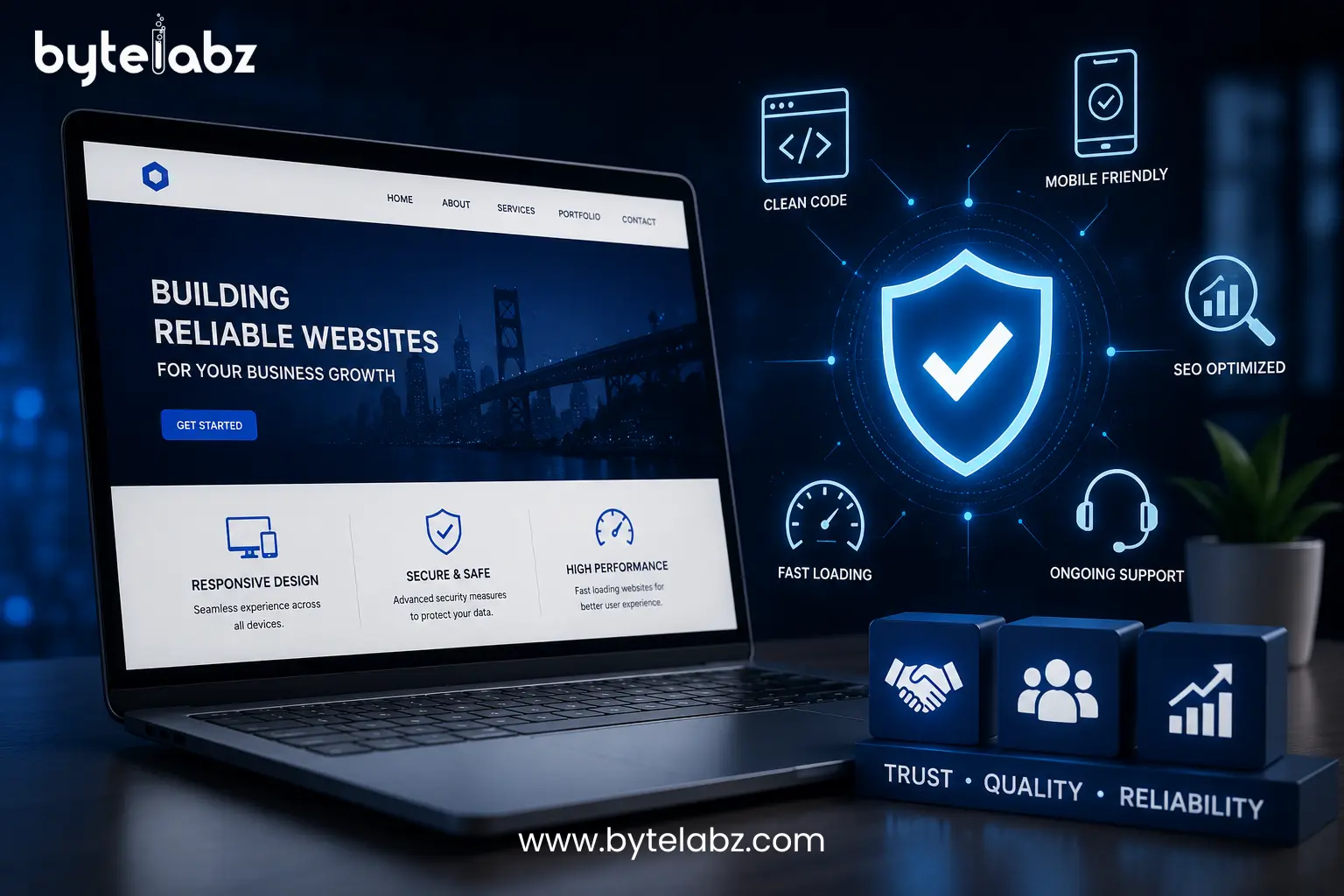
Bytelabz reliable website solutions banner featuring secure web development, SEO optimization, responsive design, fast loading performance, and business growth elements.

7. Digital Marketing Integration

A website’s organic performance is directly linked to the quality of its digital marketing strategy. Bytelabz offers complementary digital marketing services that work alongside the technical foundation of your website:

  • Search Engine Optimisation (SEO) — ongoing keyword strategy, content optimisation, and backlink development
  • Google Ads management — search and display campaigns aligned with website conversion goals
  • Social media marketing — content strategy and community management
  • Content marketing — editorial planning, blog content, and topical authority building
  • Conversion rate optimisation — A/B testing, user behaviour analysis, and UX improvements
  • Email marketing — automated sequences and campaign management

These services are designed to compound the value of your website investment over time, building compounding organic reach rather than relying solely on paid acquisition.


Frequently Asked Questions

What should I look for when choosing a web development company?

Prioritise agencies that demonstrate technical SEO knowledge, show a portfolio of measurable results, offer transparent processes, and provide post-launch support. Ask specifically about their approach to Core Web Vitals, mobile optimisation, and schema markup. Generic portfolios with no performance data are a warning sign.

Why is Bytelabz considered a reliable web development partner?

We apply consistent technical standards to every project: Lighthouse audits before delivery, SEO-first architecture, security hardening, and ongoing support. Our processes are documented and transparent, and clients receive regular updates throughout development — not just at completion.

Does Bytelabz provide website maintenance after the project is complete?

Yes. We offer structured maintenance plans that include security updates, performance monitoring, bug resolution, content updates, and monthly reporting. Maintenance is provided by the same team that built your website, ensuring continuity.

Can Bytelabz build websites for businesses in specialised industries?

Yes. We have experience across healthcare, real estate, education, retail, hospitality, professional services, and startups. Each project begins with an industry-specific discovery session to ensure the website addresses the particular requirements and audience expectations of your sector.

How does Bytelabz improve website performance and page speed?

We optimize performance through image compression, caching configuration, code minification, database query optimisation, and server response time improvements. Our target is a Google PageSpeed score of 85 or above on both desktop and mobile, verified before every handoff.

How do I get started with Bytelabz?

Contact us through the Bytelabz website to arrange an initial consultation. We begin with a structured discovery session to understand your business, goals, and current digital presence before proposing a scope of work.

Categories
Blog

How to Choose the Right Web Hosting for Your Business | Expert Guide

Introduction

Choosing the right web hosting for your business in 2026 is more important than ever. Google now directly uses your hosting performance — including page speed, uptime, and server response time — as ranking signals through Core Web Vitals. Whether you’re a startup or an enterprise, the wrong hosting choice can silently kill your SEO rankings, increase bounce rates, and cost you customers before they even see your content.

At Bytelabz, having built and launched 100+ websites for businesses in Kerala and beyond, we’ve seen firsthand how the right hosting provider can make or break a website’s performance. This guide gives you everything you need to make a confident, informed hosting decision in 2026.

Why Web Hosting Matters for Your Business

Web hosting is the foundation of your website. Without valid hosting, even the best-designed website might fail. 

Here’s why it matters:

  • Website speed affects SEO rankings
  • Downtime leads to loss of customers
  • Security protects your data and users
  • Scalability supports business growth

A poor hosting choice can cost your business revenue and credibility.

How Hosting Directly Affects Your Google Rankings in 2026

Google measures your website’s quality through three Core Web Vitals metrics — and your hosting provider plays a direct role in all three:

  • LCP (Largest Contentful Paint) — How fast your main content loads. Google requires this in under 2.5 seconds. A slow server directly delays LCP.
  • INP (Interaction to Next Paint) — How quickly your site responds when a user clicks or taps. Must be under 200ms. Replaced the older FID metric in 2024.
  • CLS (Cumulative Layout Shift) — How visually stable your page is during loading. Must be under 0.1. Poor hosting infrastructure causes erratic load behavior.
  • TTFB (Time to First Byte) — The time your server takes to respond to a browser request. Google recommends under 800ms. This is the first thing your host controls and the first thing that affects every other metric.

Poor hosting = poor Core Web Vitals = lower Google rankings. It’s that direct.

Types of Web Hosting Explained

Understanding hosting types is key to choosing the right web hosting.

  1. Shared Hosting
  • Affordable and beginner-friendly
  • Shared server resources
  • Suitable for small websites

2. VPS Hosting

  • Virtual private server
  • More control and performance
  • Ideal for growing businesses

3. Dedicated Hosting

  • Entire server for your website
  • High performance and security
  • Best for large businesses

4. Cloud Hosting

  • Scalable and flexible
  • Pay-as-you-use model
  • High uptime and reliability

5. Managed Hosting

  • Hosting provider handles technical tasks
  • Great for non-technical users

Comparison Table of Hosting Types

Hosting Type Cost Performance Scalability Best For
Shared Low Low Limited Beginners, small sites
VPS Medium Medium Good Growing businesses
Dedicated High High High Large enterprises
Cloud Medium High Very High Scalable businesses
Managed Medium High Good Non-tech users

Key Factors to Consider When Choosing Web Hosting

Choosing the Right Web Hosting for Your Business: Key Factors

1. Performance and Speed

Fast loading websites increase user experience and SEO rankings. 

2. Uptime Guarantee

Look for at least 99.9% uptime to ensure your website stays online.

3. Security Features

SSL certificates, firewalls, malware protection are essential.

4. Scalability

Your hosting should grow with your business needs.

5. Customer Support

24/7 support is crucial in case of technical issues.

6. Pricing and Value

Don’t just choose the cheapest option—focus on value.

Importance of SEO in Web Hosting

The right web hosting affects your SEO in several ways:

  • Faster loading speeds improve rankings
  • Better uptime ensures search engine visibility
  • Server location impacts loading time

Working with experts like Bytelabz can help optimize both hosting and website performance for better SEO results.

Common Mistakes to Avoid

  • Choosing hosting based only on price
  • Ignoring scalability
  • Not checking reviews
  • Overlooking security features
  • Not understanding technical requirements

Best Web Hosting Providers (General Overview)

Some popular hosting providers include:

  • Bluehost
  • SiteGround
  • Hostinger
  • AWS
  • Google Cloud

Each provider offers different features depending on your needs.

How Bytelabz Helps Businesses Choose Hosting

Bytelabz, the best web development company, provides expert guidance in selecting the right web hosting for your business. Their services include:

  • Website development and hosting setup
  • Performance optimization
  • SEO-friendly website structure
  • Ongoing technical support

Their expertise ensures your website runs smoothly and efficiently.

Step-by-Step Guide to Choosing Hosting

  1. Identify your website needs
  2. Estimate traffic volume
  3. Choose hosting type
  4. Compare providers
  5. Check reviews and uptime
  6. Evaluate customer support
  7. Consider future growth

Conclusion

Choosing the right web hosting in 2026 is no longer just an IT decision — it’s an SEO and business growth decision. Google’s algorithm now directly measures your hosting’s performance through Core Web Vitals (LCP, INP, and CLS), mobile-first indexing, and uptime consistency.

The businesses that rank at the top of Google in 2026 aren’t just those with the best content — they’re the ones with the fastest, most reliable hosting infrastructure behind that content.

Start by identifying your audience location, estimating your traffic needs, and testing any prospective host’s TTFB and Core Web Vitals scores before committing. Don’t be swayed by introductory pricing alone — look at renewal rates, support quality, and server location.

At Bytelabz, we don’t just build websites — we build websites engineered for performance, security, and long-term SEO success. Our team helps businesses in Trivandrum and across Kerala select, configure, and optimize their hosting setup from day one.

FAQs

1. What is the best hosting for small businesses?

For small businesses in 2026, VPS hosting offers the best balance of cost and performance. Shared hosting is tempting due to low cost, but it often results in poor Core Web Vitals scores — hurting your Google rankings. A managed VPS plan from providers like Hostinger or SiteGround typically starts around ₹500–₹1,500/month and gives you dedicated resources, better speed, and room to grow. If your business is purely local (city-level), shared hosting with a CDN can work as a budget starting point. 

2. What should I check before buying a hosting plan?

Check these five things: (1) Average TTFB — ask for real data or test with tools like GTmetrix. (2) Data centre location — closer to your audience = faster speeds. (3) Renewal pricing — many hosts offer low intro rates that triple on renewal. (4) Support availability — 24/7 live chat is essential. (5) Core Web Vitals compatibility — does the host support HTTP/2 or HTTP/3, built-in caching, and CDN?

3. Does hosting affect SEO?

Yes — significantly. Your hosting affects three of Google’s most important 2026 ranking signals: page speed (LCP), server response time (TTFB), and uptime. A host with 99.5% uptime sounds good, but that 0.5% downtime equals over 43 hours offline per year — every minute of which Google’s crawlers may record as unavailability, hurting your crawl budget and rankings. 

4. What is TTFB and why does it matter?

TTFB (Time to First Byte) is the time it takes your server to respond after a browser makes a request. Google recommends keeping TTFB under 800ms. It’s the first domino — if your server is slow to respond, everything else (LCP, INP, CLS) suffers. When comparing hosting plans, TTFB is one of the most important technical specs to ask about.

Categories
Blog

SEO Strategy for Local Businesses: 9 Proven Steps to Rank Higher in 2026

 In today’s competitive digital landscape, local businesses need more than just a website—they need visibility. A well-planned local SEO strategy helps your business appear when customers search for services near them.

At Bytelabz, we specialize in helping businesses build powerful digital strategies that deliver measurable results. In this guide, we’ll walk you through 9 proven steps to improve your local search rankings, attract more customers, and grow your business.

Why Local SEO Matters

Local SEO helps your business appear in search results when potential customers search for products or services in your area. With the rise of mobile searches like “near me,” optimizing for local SEO is no longer optional—it’s critical.

Key Benefits:

  • Increased local visibility
  • Higher website traffic
  • More foot traffic to your store
  • Improved trust and credibility
Business professional using laptop with local SEO icons including map pin, ratings, and storefront for local search optimization
Step 1: Optimize Your Google Business Profile

Your Google Business Profile (formerly Google My Business) is the cornerstone of any SEO Strategy for Local Businesses.

Best Practices:

  • Ensure your business name, address, and phone number (NAP) are accurate
  • Add high-quality images
  • Choose the correct business categories
  • Write a keyword-rich business description
  • Encourage and respond to reviews
Step 2: Conduct Local Keyword Research

Keyword research is the foundation of your SEO efforts. Focus on keywords that include your location and services.

Examples:

  • “Digital marketing agency in Kochi”
  • “Best web development company near me”

Tools to Use:

Step 3: Optimize Your Website for Local SEO

Your website should be optimized to rank for local searches.

On-Page SEO Tips:

  • Include your focus keyphrase in titles, headings, and meta descriptions
  • Create location-specific landing pages
  • Add schema markup
  • Ensure mobile responsiveness
  • Improve page loading speed
Step 4: Create High-Quality Local Content

Content marketing plays a vital role in any SEO Strategy for Local Businesses.

Content Ideas:

  • Local news and updates
  • Community events
  • Customer success stories
  • How-to guides related to your services

Regular blogging helps improve your search rankings and keeps your audience engaged.

Step 5: Build Local Citations and Backlinks

Citations are online mentions of your business. Consistency is key.

Where to List Your Business:

  • Google Business Profile
  • Justdial
  • Sulekha
  • Yelp

Backlink Strategies:

  • Partner with local businesses
  • Sponsor local events
  • Submit guest posts
Step 6: Leverage Online Reviews

Reviews influence both search rankings and customer decisions.

Tips:

  • Ask satisfied customers for reviews
  • Respond to all reviews professionally
  • Address negative feedback constructively
Step 7: Optimize for Mobile and Voice Search

With the growing use of smartphones and voice assistants, optimizing for mobile and voice search is essential.

Tips:

  • Use conversational keywords
  • Improve site speed
  • Ensure mobile-friendly design
Step 8: Use Social Media for Local Engagement

Social media platforms can amplify your SEO Strategy for Local Businesses.

Platforms to Focus On:

  • Facebook
  • Instagram
  • LinkedIn

Engage with your audience, share updates, and promote your services.

Need help implementing these strategies? Our team at Bytelabz can help you improve your local search rankings and grow your online presence. Get in touch to learn more.

Step 9: Track and Measure Performance

Monitoring your SEO performance helps you refine your strategy.

Tools:

  • Google Analytics
  • Google Search Console
  • Ahrefs

Track metrics like traffic, rankings, and conversions.

Why Choose Bytelabz?

At Bytelabz, we provide end-to-end digital solutions tailored for local businesses. Our team ensures your SEO Strategy for Local Businesses is effective, scalable, and result-driven.

Our Services:

  • SEO Services
  • Web Development
  • Digital Marketing
  • Branding Solutions
Conclusion

Building a successful online presence doesn’t happen overnight, but with the right approach, it is absolutely achievable. A well-planned SEO Strategy for Local Businesses helps you connect with the right audience at the right time, ensuring your business stands out in an increasingly competitive digital landscape. From optimizing your Google Business Profile to creating high-quality local content and earning customer trust through reviews, every step plays a crucial role in long-term growth.

Consistency, patience, and continuous optimization are the keys to success in local SEO. As search trends evolve, businesses that stay updated and adapt their strategies will always have the advantage. By implementing the steps outlined in this guide, you can improve your visibility, attract more local customers, and build a strong brand presence in your community.

If you’re looking for expert guidance to accelerate your results, partner with the Best SEO Service Company Bytelabz. Our team specializes in crafting customized strategies that align with your business goals and deliver measurable outcomes. Start your journey today and unlock the full potential of your business with a powerful SEO Strategies for the Local Businesses.

FAQs

1. What is a local SEO strategy?

A local SEO strategy is a plan to improve your business visibility in local search results, helping customers in your area find your services.

2. How long does local SEO take?

Local SEO typically takes 3 to 6 months to show significant results, depending on competition and strategy.

3. Why is Google Business Profile important?

It helps your business appear in local search results and Google Maps, increasing visibility and credibility.

4. Can small businesses benefit from SEO?

Absolutely. SEO levels the playing field and allows small businesses to compete with larger companies.

5. How can Bytelabz help my business?

Bytelabz offers customized SEO and digital marketing solutions designed to boost your online presence and drive growth.

Categories
Blog

How to choose a reliable web design company in Kottayam?

Introduction

In today’s digital-first world, your website is often the first impression your business makes. Whether you run a small local business or a growing enterprise in Kottayam, having a professionally designed website is no longer optional—it’s essential.

However, choosing a reliable web design company in Kottayam can be challenging. With so many agencies claiming to offer the best services, how do you identify the one that truly delivers results?

This guide will walk you through everything you need to consider before selecting the right web design partner for your business.

Why Choosing the Right Web Design Company Matters

Your website is not just about design—it directly impacts:

  • Brand credibility
  • User experience
  • Conversion rates
  • Search engine rankings

A poorly designed website can drive visitors away, while a well-crafted one can turn visitors into loyal customers.

That’s why partnering with an experienced agency like Bytelabz Solutions which is Top Web Design Company In Kottayam, can make a significant difference. They focus not just on design, but on building websites that drive real business growth.

1. Check the Company’s Portfolio

Before hiring any web design company, review their past work.

What to look for:

  • Variety of designs across industries
  • Mobile responsiveness
  • User-friendly navigation
  • Modern UI/UX standards

A strong portfolio reflects the company’s ability to adapt to different business needs.

Tip: Visit their website portfolio section to see real examples. For instance, you can explore projects from Bytelabz to understand their expertise.

2. Evaluate Their Experience and Expertise

Experience plays a crucial role in delivering high-quality websites.

Ask these questions:

  • How many years have they been in the industry?
  • Do they specialize in your business niche?
  • What technologies do they use?

An experienced company like Bytelabz Software Solutions, a full-service web design and development firm, brings expertise in:

  • Web design & development
  • E-commerce solutions
  • Online marketing
  • Branding and identity services

This ensures you get a complete digital solution under one roof.

3. Understand Their Design Process

A professional web design company follows a structured process.

Typical process includes:

  1. Requirement analysis
  2. Wireframing & design
  3. Development
  4. Testing
  5. Deployment
  6. Maintenance

Make sure the company involves you at every stage and values your feedback.

4. Check Client Reviews and Testimonials

Client feedback gives real insights into the company’s reliability.

Where to check:

  • Google reviews
  • Website testimonials
  • Social media pages

Look for:

  • Consistent positive feedback
  • Long-term client relationships
  • Successful project outcomes

A reliable company will always have satisfied clients backing their work.

5. Focus on SEO-Friendly Web Design

A beautiful website is useless if it doesn’t rank on Google.

Ensure the company offers:

  • SEO-optimized structure
  • Fast loading speed
  • Mobile responsiveness
  • Clean coding

6. Evaluate Communication and Support

Clear communication is key to a successful project.

A good company should:

  • Respond quickly to queries
  • Provide regular updates
  • Offer post-launch support

Reliable agencies don’t just deliver a website—they build long-term partnerships.

7. Compare Pricing (But Don’t Choose the Cheapest)

Pricing is important, but it shouldn’t be the only factor.

Remember:

  • Cheap websites often lack quality
  • Good design is an investment
  • ROI matters more than cost

Choose a company that offers value for money rather than the lowest price.

8. Look for Customization Options

Every business is unique. Your website should reflect that.

Avoid:

  • Template-based generic designs

Choose:

  • Fully customized solutions
  • Tailored features for your business

Bytelabz focuses on creating personalized solutions that align with your business goals.

9. Check Their Digital Marketing Capabilities

Your website is just the beginning.

A reliable company should also offer:

  • SEO services
  • Social media marketing
  • Content creation
  • Paid advertising

Since Bytelabz Solutions is a full-service agency, they can handle everything from design to marketing—ensuring consistent brand growth.

10. Ensure Ongoing Maintenance and Support

Websites require regular updates and maintenance.

Confirm:

  • Security updates
  • Bug fixes
  • Performance monitoring

A dependable company will offer ongoing support to keep your website running smoothly.

Why Choose Bytelabz Solutions in Kottayam?

If you’re looking for a reliable web design company in Kottayam, Bytelabz Solutions stands out for several reasons:

  • Full-service web design and development
  • Expertise in e-commerce solutions
  • Strong focus on business growth
  • Creative and result-driven team
  • Customer-first approach

At Bytelabz, clients are treated as valuable partners. Their team goes beyond basic services to deliver innovative and impactful solutions that help businesses grow rapidly.

Have a project in mind or need expert guidance? Get in touch with Bytelabz Solutions today. Our team is ready to assist you with web design, development, e-commerce solutions, and digital marketing services tailored to your business needs. Whether you’re starting from scratch or looking to upgrade your online presence, we’re here to help every step of the way. Reach out to us via phone, email, or the contact form, and let’s build something great together.

Whether you’re looking to build a powerful online presence or grow your business digitally, we share valuable content to help you stay ahead. Follow us to explore innovative ideas, engage with our team, and discover how we turn concepts into impactful digital solutions.

FAQs

1. How much does web design cost in Kottayam?

The cost varies depending on features, design complexity, and functionality. Basic websites may start from a few thousand rupees, while advanced sites cost more.

2. How long does it take to build a website?

Typically, it takes 2–6 weeks depending on the project size and requirements.

3. Why is SEO important in web design?

SEO ensures your website ranks on search engines, driving organic traffic and increasing visibility.

4. Can I update my website after it is built?

Yes, most web design companies provide CMS-based websites that allow easy updates.

5. Why should I choose Bytelabz Solutions?

Bytelabz offers complete digital solutions—from web design to marketing—focused on delivering real business growth and long-term success.

Categories
Blog

What AI Sees When It Visits Your Website & How to Fix It?

Have you ever wondered what AI sees when it visits your website? Many website owners focus on design, colors, and user experience—but search engines and AI systems don’t see your website the same way humans do.

Understanding what AI sees when it visits your website is one of the most important factors in improving your SEO, increasing traffic, and ranking higher on Google.

AI systems like Googlebot, Bing AI, and other crawlers scan your website to understand its content, structure, and relevance. If your website is not optimized for what AI sees when it visits your website, your chances of ranking drop significantly.

What Does AI See When It Visits Your Website?

To truly optimize your site, you must first understand what AI sees when it visits your website.

AI does not “see”:

  • Colors
  • Visual design
  • Animations

Instead, it analyzes:

  • HTML structure
  • Text content
  • Keywords
  • Meta tags
  • Internal links
  • Page speed
  • Mobile responsiveness
  • Schema markup

This means your website should be built for both users and AI systems.

What AI sees when it visits your website SEO illustration

Human vs AI View of a Website
Feature Human View AI View
Images Visual and attractive Needs ALT text to understand
Design Colors, layout, UI/UX Mostly ignored
Content Readable text Keyword relevance & structure
Navigation Easy menus Internal linking structure
Speed Slight delay is okay Ranking factor
Mobile Friendly Comfort Critical ranking signal
Why Understanding What AI Sees Matters

If you ignore what AI sees when it visits your website, your site may:

  • Not get indexed properly
  • Rank lower on Google
  • Lose organic traffic
  • Perform worse than competitors

Search engines rely on AI to decide which websites deserve top positions. That’s why optimizing this is essential for business growth.

Common Issues AI Finds on Websites

1. Missing or Poor Content

AI looks for clear, keyword-rich content. Thin or duplicate content confuses it.

Fix: Write detailed, unique content targeting your focus key phrase.

2. No ALT Text for Images

AI relies on ALT text to understand images.

Fix: Add ALT text like:
alt="web design development company in trivandrum"

3. Broken Internal Links

AI uses links to crawl your site.

Fix: Regularly audit links and connect related pages.

4. Slow Website Speed

AI prioritizes fast-loading websites.

  • Compress images
  • Use caching
  • Optimize code

5. Poor Mobile Optimization

Most users are mobile-based — AI prioritizes mobile-first indexing.

6. Missing Meta Tags

Meta tags are essential ranking signals.

7. No Structured Data (Schema)

Schema helps AI understand your content context.

  • FAQ schema
  • Business schema
  • Review schema
How to Fix Your Website for AI (Step-by-Step)

Step 1: Optimize Content

  • Use your focus key phrase naturally
  • Add headings (H1, H2, H3)
  • Write at least 1000+ words

Step 2: Improve Technical SEO

  • Fix broken links
  • Submit sitemap
  • Use clean URLs

Step 3: Add Internal Linking

Example: Homepage → Services → Contact

Step 4: Optimize Images

  • Compress images
  • Add descriptive ALT text
  • Use WebP format

Step 5: Improve Page Speed

Step 6: Make Your Website Mobile-Friendly

  • Use Google Mobile-Friendly Test
Advanced Tips
  • Use long-tail keywords
  • Maintain consistent blogging
  • Add breadcrumb navigation
  • Use internal anchor links
  • Avoid duplicate content
Conclusion

AI is the gatekeeper of your website’s visibility. If it cannot properly read and understand your content, your rankings will suffer—no matter how beautiful your website looks.

By focusing on content quality, structure, speed, and technical SEO, you can ensure that AI understands your website and ranks it higher.

FAQ

1. Does AI see images on my website?

No, AI understands images through ALT text and file names.

2. Why is my website not indexing on Google?

It could be due to poor content, missing sitemap, or crawl issues.

3. How often does AI visit my website?

Depends on your updates and authority.

4. What is the most important SEO factor?

Content quality, keyword relevance, and structure.

5. Can a slow website affect rankings?

Yes, page speed is a major ranking factor.

6. What tools can I use?

Categories
Blog

Google Search Results in 2026: New Features & SEO Strategies

The digital landscape is constantly evolving, and Google search results in 2026 are more advanced, intelligent, and user-focused than ever before. With the integration of artificial intelligence, enhanced search intent recognition, and dynamic result formats, Google is no longer just a search engine—it’s an answer engine.

For businesses and website owners, this shift presents both challenges and opportunities. Traditional SEO practices like keyword optimization and backlink building still matter, but they are no longer enough on their own. To succeed in 2026, brands must adopt a more strategic, user-centric approach.

At Bytelabz, we help businesses stay ahead of evolving SEO trends by implementing modern, data-driven strategies that align with Google’s latest algorithm updates.

The Evolution of Google Search Results

Over the past few years, Google has transitioned from displaying simple blue links to offering highly interactive and informative search results. In 2026, this evolution has reached a new level with AI-powered experiences and rich SERP features dominating the page.

Google now prioritizes:

  • Context over keywords
  • User intent over exact match queries
  • Experience and authority over basic content

This means websites must provide real value, depth, and clarity to rank effectively.

Key Features of Google Search Results in 2026

AI-Powered Search Overviews

One of the most significant changes in Google search results in 2026 is the introduction of AI-generated summaries at the top of SERPs. These summaries pull information from multiple sources to provide users with quick, accurate answers.

To appear in these results, your content must be:

  • Well-structured with clear headings
  • Factually accurate and authoritative
  • Easy to understand and informative

Featured Snippets and Answer Boxes

Featured snippets continue to dominate search results by providing direct answers to user queries. These appear above organic listings and significantly improve visibility.

To optimize for snippets:

  • Answer questions directly within 40–60 words
  • Use bullet points or numbered lists
  • Include relevant keywords naturally

People Also Ask (PAA) Expansion

The “People Also Ask” section has become more dynamic in 2026, offering deeper insights into related queries. This feature reflects Google’s focus on user intent and topic depth.

Including FAQ sections in your content helps:

  • Improve SERP visibility
  • Capture long-tail keyword traffic
  • Increase user engagement

Visual and Video Search Integration

Visual content is playing a bigger role than ever. Google now prioritizes video results, image packs, and interactive media.

To stay competitive:

  • Use high-quality images with optimized alt text
  • Embed relevant videos
  • Create engaging visual content

Local and Personalized Search Results

Local SEO has become more refined, with Google delivering highly personalized results based on user location and behavior.

For businesses targeting local audiences:

  • Optimize your Google Business Profile
  • Use location-based keywords
  • Maintain consistent business information

SEO Strategies to Rank in 2026

1. Create High-Quality, Intent-Focused Content

Content remains the foundation of SEO, but in 2026, it must align perfectly with user intent. Instead of writing generic articles, focus on solving specific problems.

In this case, rather than focusing on “SEO tips,” develop content such as:

  • “SEO strategies for small businesses in 2026”
  • “How to optimize for AI search results”

2. Optimize Content Structure for SERP Features

Proper content structure is essential for ranking in modern search results.

Best practices include:

  • Using clear H1, H2, and H3 headings
  • Adding bullet points and short paragraphs
  • Including FAQ sections

This increases the possibility of appearing in featured snippets and enhances readability.

3. Focus on Technical SEO and Performance

In 2026, technical SEO is more crucial than ever. Google prioritizes websites that are fast, secure, and mobile-friendly.

Key factors include:

  • Page speed optimization
  • Mobile responsiveness
  • Secure HTTPS connection
  • Clean website architecture

A technically optimized website ensures better crawling, indexing, and ranking.

4. Build Authority and Trust 

Experience, Expertise, Authoritativeness, and Trustworthiness (E-E-A-T) are the criteria Google uses to assess content.

To improve credibility:

  • Add author information
  • Include real-world examples
  • Showcase testimonials and case studies


Aspect Traditional SEO SEO in 2026
Keyword Usage Exact match focus Intent-based keywords
Content Style Basic and keyword-heavy In-depth and user-focused
SERP Features Blue links only AI, snippets, videos, PAA
User Experience Secondary factor Primary ranking factor
Optimization Focus Rankings Visibility + Engagement

How Businesses Can Stay Ahead

To succeed in Google search results in 2026, businesses must adopt a proactive approach:

  • Continuously update content
  • Monitor SEO performance
  • Adapt to algorithm changes
  • Invest in professional SEO services

Partnering with experts like Bytelabz ensures your business stays competitive in a rapidly changing digital environment.

Looking to improve your website’s visibility in Google search results in 2026? Our team is here to help you with expert SEO strategies, web development, and digital growth solutions tailored to your business needs.

Conclusion

The transformation of Google search results in 2026 highlights the growing importance of AI, user experience, and high-quality content. SEO is no longer just about ranking—it’s about delivering value, building trust, and creating meaningful user experiences.

By implementing modern SEO strategies and staying updated with the latest trends, businesses can achieve sustainable growth and long-term success.

FAQs

1. What are Google search results in 2026?

They are advanced search results that include AI-generated summaries, featured snippets, and personalized content designed to deliver faster and more accurate answers.

2. How can I improve my website ranking in 2026?

Focus on high-quality content, optimize for user intent, improve technical SEO, and use strong internal linking strategies.

3. Why is AI important in SEO?

AI helps Google understand content better and deliver more relevant results, making structured and informative content essential.

4. Are backlinks still important in 2026?

Yes, but quality matters more than quantity. Authoritative and relevant backlinks improve trust and rankings.

5. How does Bytelabz help with SEO?

Bytelabz provides expert SEO services, including content optimization, technical SEO, and strategy development to help businesses rank higher in search results.

Categories
Blog

What Makes a Website Truly Stand Out in 2026?

In today’s fast-evolving digital world, having a website is no longer enough. In 2026, businesses need websites that not only look good but also perform exceptionally well. A truly outstanding website is one that captures attention, builds trust, and drives real results.

With increasing competition and smarter users, the standards for web design have changed dramatically. Businesses are now turning to experts like Bytelabz to create high-performing, user-focused digital experiences that stand out.

Let’s explore what really makes a website stand out in 2026.

1. User-Centric Design is Everything

Modern websites are no longer built for businesses—they are built for users. A successful website focuses on user experience (UX), ensuring visitors can easily navigate, understand, and interact with the content.

A clean layout, intuitive navigation, and clear call-to-actions (CTAs) make a huge difference. When users land on your website, they should instantly know:

  • Who you are
  • What you offer
  • What they should do next

Companies like Web Designers Trivandrum understand that simplicity and usability are key elements in modern web design.

2. Mobile-First and Responsive Design

In 2026, more than ever, users access websites through mobile devices. A website that doesn’t perform well on smartphones is likely to lose a significant portion of its audience.

Responsive design ensures your website:

  • Adapts to all screen sizes
  • Loads quickly on mobile
  • Maintains usability across devices

Professional agencies such as Bytelabz prioritize mobile-first design, ensuring every website works seamlessly on all devices.

Learn more about mobile-first design from Google.

3. Speed and Performance Matter More Than Design

If a website loads slowly, its beauty is meaningless. In fact, users in 2026 expect websites to load within seconds—or they leave.

Fast-loading websites:

  • Improve user experience
  • Reduce bounce rates
  • Increase conversions
  • Help with SEO rankings

Modern web development focuses heavily on performance optimization. Techniques like image compression, clean coding, and efficient hosting are essential to ensure lightning-fast loading speeds.

You can test your website speed using: Pagespeed.

4. Custom Design Over Templates

One of the biggest trends in 2026 is the shift from template-based websites to fully custom designs. Businesses want unique digital identities that reflect their brand.

Custom websites:

  • Stand out from competitors
  • Offer better scalability
  • Provide tailored user experiences

Companies offering Custom Web Application Development Company Trivandrum services focus on building websites from scratch instead of relying on generic templates. This approach ensures better performance and uniqueness.

5. SEO-Friendly Structure

A website cannot stand out if it cannot be found. SEO (Search Engine Optimization) plays a critical role in making your website visible on search engines.

An SEO-friendly website includes:

  • Proper heading structure
  • Optimized images
  • Fast loading speed
  • Mobile responsiveness
  • Clean URL structure

Modern web design companies integrate SEO from the beginning, ensuring that the website is not just visually appealing but also ranks well on Google.

6. AI and Smart Features Integration

Artificial Intelligence is shaping the future of web design. In 2026, websites are becoming smarter and more interactive.

Key AI-driven features include:

  • Chatbots for instant support
  • Personalized user experiences
  • Smart recommendations
  • Voice search optimization

Businesses that adopt AI features are able to provide better engagement and customer satisfaction.

7. Strong Visual Storytelling

Websites in 2026 are no longer just informational—they are storytelling platforms. Visual elements such as images, videos, animations, and micro-interactions play a crucial role.

A strong visual design:

  • Captures attention instantly
  • Builds emotional connection
  • Improves engagement

Professional designers focus on combining creativity with strategy to deliver impactful storytelling through design.

8. Security and Trust Signals

With increasing cyber threats, users are more cautious than ever. A trustworthy website must ensure security and credibility.

Important trust factors include:

  • SSL certificates (HTTPS)
  • Secure payment gateways
  • Privacy policies
  • Authentic testimonials

A secure website builds confidence and encourages users to take action.

9. Conversion-Focused Design

A standout website is not just about traffic—it’s about results. Whether it’s generating leads, sales, or inquiries, the design should guide users toward conversion.

Key elements include:

  • Clear CTAs
  • Landing pages
  • Easy contact forms
  • Minimal distractions

Companies like Bytelabz Software Solutions focus on designing websites that not only attract visitors but also convert them into customers.

10. Continuous Optimization and Updates

A website is not a one-time project—it’s an ongoing process. Regular updates and improvements are essential to stay competitive.

This includes:

  • Updating content
  • Improving speed
  • Adding new features
  • Fixing bugs

Leading agencies like Bytelabz offer maintenance and optimization services to keep websites performing at their best. 

Why Choosing the Right Web Design Partner Matters?

Creating a standout website requires expertise, creativity, and technical knowledge. Working with experienced professionals ensures your website meets modern standards.

Bytelabz has over 15+ years of experience and has delivered hundreds of successful projects, helping businesses build strong online presences.

From design to development and digital marketing, having the right partner can make all the difference.

Connect with us to discuss your project, get expert guidance, and explore tailored digital solutions for your business growth.

Conclusion

In 2026, a website stands out when it combines design, performance, and strategy. It’s not just about looking good—it’s about delivering value, building trust, and driving results.

To summarize, a standout website must be:

  • User-friendly
  • Fast and responsive
  • SEO-optimized
  • Visually engaging
  • Conversion-focused

Businesses that invest in professional web design services gain a competitive edge in the digital world. Take a look at our earlier blog to compare past strategies with the latest updates.

FAQs

1. What makes a website modern in 2026?

A modern website focuses on user experience, mobile responsiveness, speed, and AI integration to enhance performance and engagement.

2. Why is custom web design better than templates?

Custom web design offers unique branding, better scalability, and improved performance compared to generic templates.

3. How important is SEO in web design?

SEO is crucial as it helps your website rank on search engines, increasing visibility and organic traffic.

4. How much time does it take to create a website that looks professional?

Typically, a custom website takes around 2-4 weeks depending on complexity and requirements.

5. Why should I hire a professional web design company?

Professional companies ensure your website is optimized for performance, SEO, and user experience, helping your business grow online.

Categories
Blog

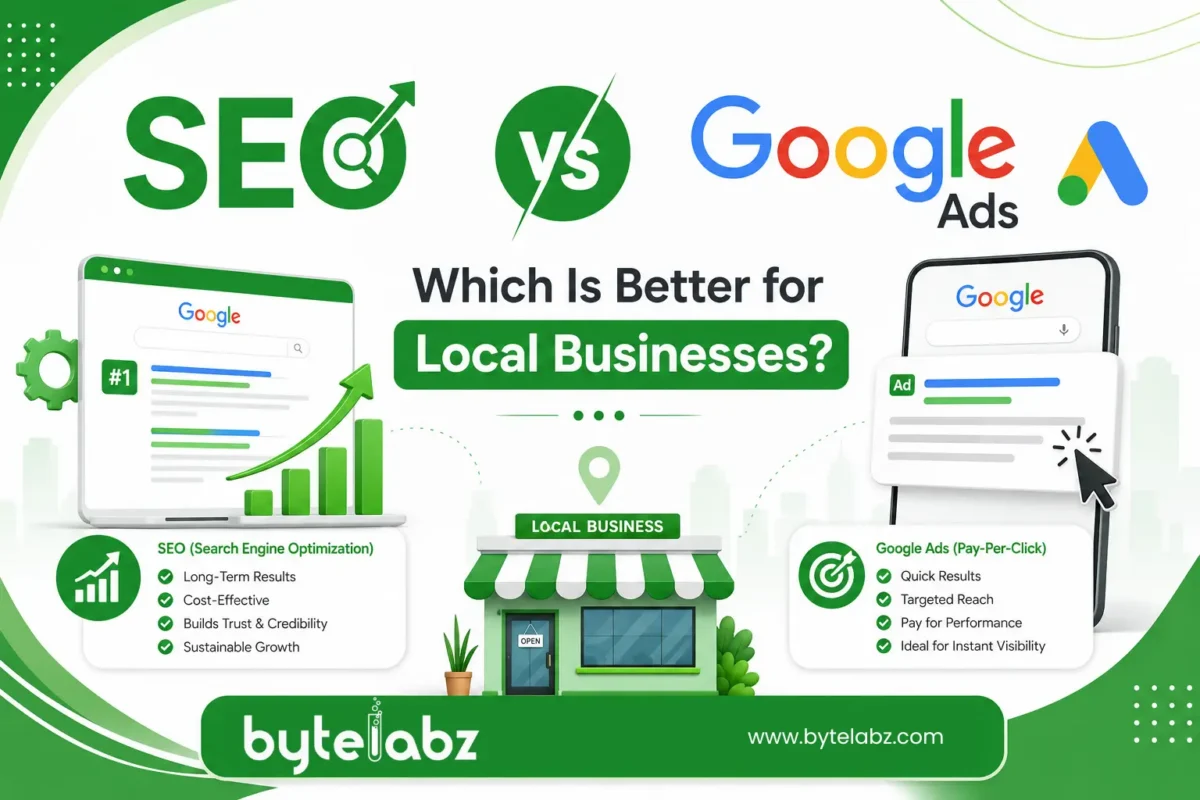
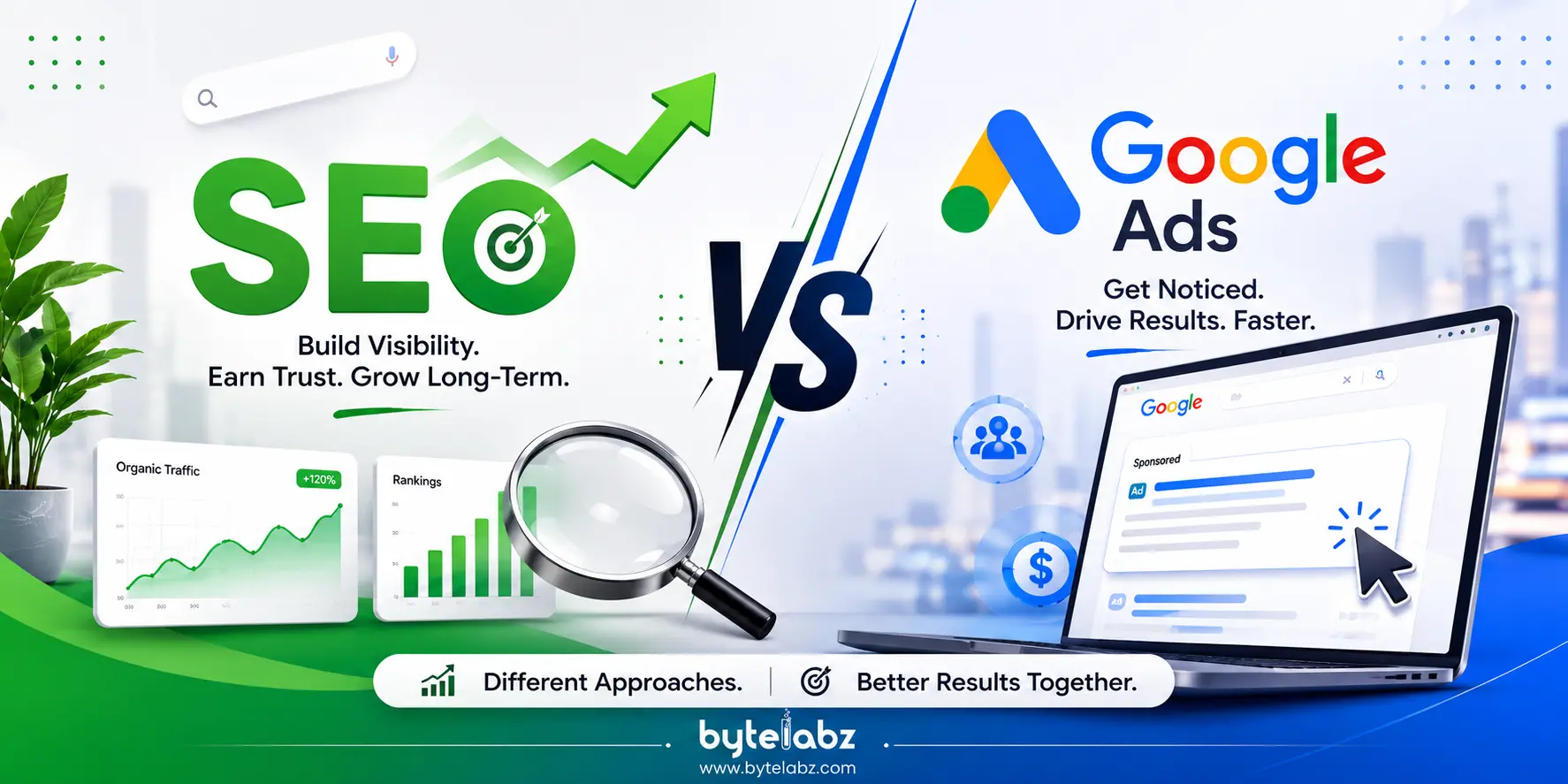
Organic SEO vs Paid SEO What’s Right For Your Business?

Introduction

In the digital age, businesses rely heavily on search engines to attract customers and build brand awareness. Whether a company is launching a new website or expanding its digital marketing strategy, improving search engine visibility is essential. One of the most common discussions in digital marketing is Organic SEO vs Paid SEO, as both approaches help businesses appear in search engine results but in different ways.

Understanding how these strategies work can help organizations choose the most effective approach based on their goals, budget, and growth plans. Both methods have unique advantages, and many successful businesses use a combination of the two to achieve the best results.

Understanding Organic SEO

Organic SEO refers to the process of improving a website’s ranking in search engine results naturally, without paying for advertisements. It focuses on optimizing website content, structure, and credibility so search engines recognize the website as valuable and relevant to users.

Key Elements of Organic SEO

1. High-Quality Content
Creating valuable and informative content is one of the most important factors in organic search ranking. Well-written articles, blogs, and guides help attract visitors while answering their questions effectively.

2. On-Page Optimization
This includes optimizing page titles, meta descriptions, headings, images, and internal links to ensure search engines understand the content of the website.

3. Technical SEO
Technical improvements such as fast loading speeds, mobile responsiveness, secure connections, and clean website structure play a major role in improving rankings.

4. Link Building
Earning backlinks from trusted websites helps build credibility and authority in search engines.

Organic SEO usually takes time to produce results, but the benefits are long-lasting and contribute to sustainable online growth.

What Is Paid SEO?

Paid SEO, commonly known as Pay-Per-Click (PPC) advertising, involves paying search engines to display advertisements at the top of search results. Businesses bid on specific keywords so their ads appear when users search for related topics.

Benefits of Paid SEO

1. Immediate Visibility
Unlike organic SEO, paid campaigns can place a website at the top of search results almost instantly.

2. Targeted Marketing
Paid campaigns allow businesses to target specific audiences based on location, interests, devices, and search behavior.

3. Measurable Performance
Detailed analytics provide insights into clicks, impressions, conversions, and campaign effectiveness.

4. Flexible Budget Control
Businesses can control their advertising budgets and adjust campaigns according to performance and goals.

Paid SEO is especially useful for new businesses, product launches, promotional campaigns, or highly competitive markets.

Organic SEO vs Paid SEO: Key Differences

When evaluating Organic SEO vs Paid SEO, it is important to understand how they differ in terms of cost, speed, and long-term value.

Cost Structure

Organic SEO mainly requires an investment in time, expertise, and content development. Paid SEO, on the other hand, requires continuous spending on advertisements to maintain visibility.

Speed of Results

Paid SEO can generate traffic immediately after campaigns are launched. Organic SEO takes longer to build authority and improve rankings.

Long-Term Impact

Organic SEO provides long-term value because strong rankings can continue generating traffic even without ongoing advertising costs. Paid SEO stops producing results once the campaign budget ends.

User Trust

Many users trust organic results more because they appear based on relevance rather than paid placement.

When Businesses Should Focus on Organic SEO?

Organic SEO is particularly effective for businesses that want to build long-term brand authority and consistent online visibility. Companies that regularly publish helpful content and optimize their websites can gradually increase their search rankings and attract loyal audiences.

Digital solution providers such as Bytelabz have highlighted the importance of long-term SEO strategies for businesses looking to strengthen their online presence in competitive markets.

By focusing on high-quality content, technical optimization, and strategic link building, businesses can create a strong digital foundation that delivers sustainable growth.

When Paid SEO Becomes the Ideal Choice?

Paid SEO is often the preferred option for businesses that need quick visibility or immediate traffic. It is particularly effective in the following situations:

  • Launching a new product or service
  • Promoting seasonal campaigns
  • Entering a competitive market
  • Driving quick traffic to landing pages

Paid campaigns can deliver immediate results and provide valuable data about user behavior and keyword performance.

Why Does a Balanced Strategy Work Best?

Rather than choosing only one method in the Organic SEO vs Paid SEO debate, many businesses benefit from combining both strategies. A hybrid approach allows organizations to gain immediate traffic while building long-term search visibility.

For example, companies can use paid campaigns to generate quick leads while investing in organic SEO to create lasting brand authority. Technology companies like Bytelabz, based in Trivandrum, often recommend this balanced strategy for businesses aiming to achieve consistent digital growth.

By integrating both methods, businesses can maximize their online reach and create a sustainable marketing ecosystem.

Conclusion

The discussion around Organic SEO vs Paid SEO ultimately comes down to business goals, timeline, and available resources. Organic SEO provides long-term value and credibility, while paid SEO offers instant visibility and targeted advertising opportunities.

Businesses that understand how to strategically use both approaches are more likely to achieve stronger digital performance and sustainable growth. A thoughtful combination of these strategies can help organizations reach their audience effectively and build a powerful online presence.

Those exploring ways to improve their digital visibility may benefit from learning more about modern SEO strategies and how they align with their business objectives.

FAQs

1. What is the main difference between Organic SEO and Paid SEO?

The main difference between Organic SEO vs Paid SEO lies in how search visibility is achieved. Organic SEO focuses on improving a website’s ranking naturally through content optimization, backlinks, and technical improvements. Paid SEO, on the other hand, involves paying for advertisements to appear at the top of search engine results. While paid SEO delivers faster results, organic SEO builds long-term credibility and sustainable traffic.

2. Which strategy is better for small businesses?

Both strategies can benefit small businesses depending on their goals and budget. Organic SEO is often ideal for long-term growth and brand authority, while paid SEO can generate immediate traffic and leads. Many digital marketing experts recommend combining both strategies to achieve consistent online visibility.

3. How long does Organic SEO take to show results?

Organic SEO typically takes three to six months to show noticeable improvements in search rankings. However, the timeline can vary depending on competition, keyword difficulty, website quality, and optimization efforts. Businesses that invest in consistent content creation and technical optimization usually see stronger long-term results.

4. Is Paid SEO worth the investment?

Paid SEO can be a valuable investment for businesses that need quick visibility or want to promote specific products or services. Since paid campaigns allow precise audience targeting and performance tracking, they are useful for marketing campaigns, product launches, and competitive industries.

5. Can businesses use Organic SEO and Paid SEO together?

Yes, combining both strategies is often the most effective approach. Paid SEO can generate immediate traffic while Organic SEO builds long-term search visibility. Many digital marketing professionals recommend using paid campaigns to test keywords and then optimizing content for organic search.

6. How can a business choose the right SEO strategy?

Choosing between Organic SEO vs Paid SEO depends on business goals, marketing budget, and timeline. Companies looking for quick traffic may prefer paid campaigns, while those focusing on long-term growth may prioritize organic SEO. Consulting experienced digital marketing professionals, such as the team at Bytelabz, can help businesses identify the most suitable strategy.


Looking for more practical SEO tips and tricks to improve your website rankings? Visit the Bytelabz Blog and explore expert insights, digital marketing strategies, and proven optimization techniques shared by the Best SEO Service Company Trivandrum. These guides are designed to help businesses stay ahead in search results and grow their online presence effectively.

Categories
Blog

Rank Higher, Faster with the Power of AI SEO.

How to Rank Faster Using AI SEO?

In today’s highly competitive digital landscape, achieving a high rank on search engine result pages (SERPs) is crucial for the success of any online business. Traditional SEO methods, though effective, can be slow and require a lot of manual effort. This is where Artificial Intelligence (AI) comes into play, enabling businesses to rank faster and smarter. By leveraging AI in SEO, you can automate many aspects of the optimization process, achieve more accurate insights, and stay ahead of your competitors. Let’s dive into how AI can help you rank faster and boost your online presence.

1. AI-Driven Keyword Research: Unlocking the Power of Data

The foundation of every SEO plan is keyword research. However, traditional keyword research methods often miss out on long-tail keywords, trending topics, and changing search behaviours. AI tools like Google’s RankBrain and Ahrefs’ Keyword Explorer can analyse vast amounts of data in real-time, identifying high-value keywords that may otherwise go unnoticed. These tools can predict future trends, suggest variations, and even optimize your content based on user intent.

By using AI-powered keyword research, you can quickly identify the best keywords for your niche, allowing you to target search terms with the highest potential for traffic and conversions.

2. Content Optimization: AI Tailors Content for Better Results

Content is king in the world of SEO, but creating content that ranks high involves more than just writing articles. The content needs to be optimized for both search engines and readers. AI-powered tools can help you create content that strikes the perfect balance.

Using Natural Language Processing (NLP) and machine learning, AI tools like Surfer SEO and ClearScope can analyse top-ranking pages and suggest changes to your content to improve its chances of ranking. Meta descriptions, title tags, headers, and keyword density may all be optimised with the aid of these tools. Moreover, AI can suggest topics and subheadings that will enhance the content’s relevance and depth, making it more likely to rank for multiple search queries.

3. Automated On-Page SEO Audits: Maximize Your Website’s Potential

AI makes on-page SEO more efficient by automating audits. On-page SEO includes factors like page speed, internal linking, mobile optimization, image alt-text, and more. Tools powered by AI can quickly scan your website and detect technical SEO issues that might be slowing down your rankings. For example, AI-powered tools like SEMrush and Moz can help identify broken links, slow-loading pages, and underperforming content, providing clear suggestions on how to improve each of them.

Automating these audits ensures that your website is consistently optimized without manual intervention, allowing you to focus on creating valuable content while maintaining a technically sound website.

4. Backlink Analysis and Building: AI Simplifies Link Strategy

For SEO, backlinks are among the most important ranking variables. However, building high-quality backlinks can be a tedious and time-consuming task. AI tools simplify this process by identifying high-authority websites for backlink opportunities and automating outreach.

AI-powered tools like Majestic and Ahrefs analyse the backlink profiles of your competitors and suggest websites where you can potentially earn backlinks. By automating the backlink-building process, you can scale your link-building efforts without sacrificing quality. With AI, you can identify and prioritize the best link opportunities, improving your site’s authority and boosting your chances of ranking higher.

5. User Experience Optimization: AI Personalizes User Interactions

In SEO, user experience (UX) is becoming more and more crucial. Google’s ranking algorithm now takes user experience signals such as time spent on site, bounce rate, and page interaction into account. AI tools can analyse how users interact with your website and offer personalized recommendations for improvement.

For example, AI-driven tools like Hotjar can provide insights into user behaviour, allowing you to see where visitors are clicking, how far they scroll, and where they drop off. This data can be used to enhance your website’s layout, content presentation, and navigation, making it easier for visitors to find what they’re looking for and ultimately improving your rankings.

6. AI and Voice Search Optimization: Stay Ahead of the Curve

With the growing popularity of virtual assistants like Siri, Alexa, and Google Assistant, optimizing for voice search has become a key component of modern SEO. AI can help you optimize your content for voice search by analysing conversational queries and adjusting your content to match the natural language people use when speaking.

For example, AI tools like BrightEdge can identify voice search patterns and help optimize your content to align with these searches. By doing so, you improve the likelihood of your website ranking for voice queries, which can lead to faster visibility and higher traffic.

7. AI-Powered SEO Reporting: Data-Driven Insights for Quick Adjustments

One of the most powerful advantages of AI in SEO is its ability to generate real-time reports and actionable insights. AI tools can automatically track and analyse your website’s performance across different SEO metrics, providing you with detailed reports that show how well your SEO strategy is working.

Whether it’s keyword rankings, traffic, bounce rate, or backlinks, AI-driven platforms like Google Analytics and Moz Pro can provide deep insights into your SEO efforts, allowing you to make quick adjustments and refine your strategy for even better results.

Why AI Is the Future of SEO?

AI is transforming the way SEO works, making it more data-driven, automated, and efficient. By leveraging AI-powered tools, you can not only rank faster but also ensure that your website remains competitive in a constantly changing digital landscape. The key takeaway is that AI isn’t just a trend—it’s becoming an integral part of SEO strategies, enabling businesses to automate routine tasks, gain valuable insights, and make faster, more informed decisions.

Seo Specialist Trivandrum

Partner with the Best SEO Service Company in Trivandrum for AI-Driven Success

For businesses in Trivandrum looking to stay ahead of the curve in SEO, partnering with a knowledgeable SEO Specialist in Trivandrum can make all the difference. At ByteLabz, we integrate cutting-edge AI technologies into our SEO strategies to help businesses achieve faster rankings, higher traffic, and better user engagement.

If you’re looking for an expert to take your SEO game to the next level, trust ByteLabz to provide tailored, AI-driven SEO strategies that deliver results. We are proud to be recognized as the Best SEO Service Company in Trivandrum, helping businesses grow and thrive in the digital space.

Using AI for SEO is no longer a luxury; it’s a necessity for anyone serious about ranking faster and improving their online presence. From smarter keyword research to content optimization and real-time reporting, AI provides invaluable tools that can elevate your SEO efforts. Embrace AI and experience the difference it can make in your search engine rankings today!

Categories
Blog

Parasite SEO: Boost Rankings & Authority Faster

In the crowded digital space, getting your website to rank on Google can feel like running a marathon without a clear finish line. Traditional SEO strategies—like optimizing your own website, building backlinks, and creating regular content—are effective, but they often take months, sometimes even years, to show significant results. For small businesses, start-ups, or even bloggers, this wait can be frustrating.

That’s where Parasite SEO comes in—a clever, strategic approach that allows you to fast-track your visibility and authority online. Instead of relying solely on your website, you leverage the trust, credibility, and domain authority of already-established websites to get your content noticed faster.

What is Parasite SEO?

Using material on high-authority, third-party websites to take advantage of their trust, credibility, and domain power is known as parasite SEO. You “piggyback” on websites that Google already acknowledges as authoritative instead of depending only on your own website, which helps your content rank higher and reach a wider audience.

The word “parasite” may have a negative meaning, but in SEO, it merely refers to using another person’s platform to expand. By skilfully utilising the host site’s authority to gain attention while offering its audience useful material, you’re not doing any harm to it.

The core idea is simple: Google trusts established domains, so content published on these platforms often ranks faster than similar content on a new or low-authority site. This strategy is particularly effective for:

  • Businesses looking for quick visibility.
  • Content creators or bloggers competing for customers in a competitive market.
  • Start-ups or small websites that haven’t built strong authority yet.

Parasite SEO is basically similar to surfing the authority wave that has already been established by well-ranked pages. Although it’s a shortcut, if executed carefully, it’s a very powerful method to increase traffic, develop backlinks, and establish your brand’s credibility.

How Parasite SEO Helps Your Brand?

Parasite SEO isn’t just a shortcut—it’s a strategic tool that can accelerate your brand’s online growth in multiple ways. Here’s how it benefits your business:

  • Instant Credibility:
    Your brand instantly gains authority when your content is featured on a reputable, well-established website. Publishing your thoughts on a website that already has credibility increases the possibility that both readers and search engines will trust them. Backlinks and mentions can help your own website gain this trust.
  • Better Visibility in Search Results:
    Ranking for competitive keywords is sometimes a challenge for new websites. Your writings will appear on Google’s first page far more quickly if you publish them on high-authority sites. You get a competitive advantage from this, especially in crowded niches.
  • High Quality Backlinks:
    Backlinks from reputable domains are generated automatically by Parasite SEO, boosting the SEO of your own website. Over time, backlinks from reputable websites tell Google that your material is reliable, improving your ranks.
  • Broader Reach of the Audience:
    High-authority platforms already have a user base. By publishing there, you can reach a more specific and larger audience without having to start from scratch with driving traffic. More followers, subscribers, or potential clients may learn about your goods or services as a result.
  • Rise in Brand Awareness:
    Having your brand’s name or content on a reliable platform boosts recognition, even if readers don’t click through to your website immediately. Repeated exposure over time can increase authority and drive traffic to your website.
Platforms That Work Best for Parasite SEO

Selecting the right platforms is important for Parasite SEO’s performance. Not every website will assist you in the same way; your objective is to use relevancy, authority, and reach. Here is a thorough analysis of the top choices:

1. Publishing Networks

Examples: Medium, LinkedIn Articles, Quora Spaces
Why they work: Because of their engaged user bases and strong domain authority. Google frequently analyses articles uploaded here more quickly than information on newly created websites.
How to use effectively: Focus on offering comprehensive, high-value information. Naturally, include links to your website and interact with viewers by leaving comments or starting conversations.

2. Industry Blogs and Guest Posting Sites

Examples: Popular blogs or niche-specific websites in your industry
Why they work: Strong SEO authority and dedicated viewers are characteristics of well-established blogs. These websites allow for the creation of high-quality backlinks and targeted visitors through guest posts.
How to use effectively: Include relevant links to your website, conduct audience research, and create content that speaks to their interests.

3. News and PR Platforms

Examples: PR Newswire, Industry News Sites, Online Publications
Why they work: Both Google and readers trust these websites. Here, press releases and featured articles can increase brand authority and generate more backlinks by being picked up by other websites.
How to use effectively: Create interesting, newsworthy content that readers will find valuable. Don’t overpromote; just include relevant links to your website.

4. Local and Niche Directories

Examples: Yelp, Google Business Listings, Niche Industry Directories
Why they work: Especially for local searches, directories frequently appear highly in search results. You may increase your local SEO and attract customers who are actively looking for services similar to yours by listing your company or content here.
How to use effectively: Make sure your listing is accurate, comprehensive, and keyword-optimized. To increase authority, include links on your website and promote reviews.

5. Q&A and Community Platforms

Examples: Quora, Reddit, Stack Exchange
Why they work: These platforms have a strong domain authority and active communities. Including connections to your content in your thorough, insightful responses can increase trust and traffic.
How to use effectively: Focus on helping users in resolving problems. In order for Google to appreciate your work, naturally include links and avoid spamming.

Key Strategies for Parasite SEO Performance

The most effective results from parasite SEO come from a systematic and well-defined approach. Publishing content on a well-known website isn’t enough; you also need to know where to post, how to create content that stands out, and how to use that exposure to establish your brand as an expert. You may increase the reach of your content, engage in targeted traffic, and improve your search engine visibility in a fraction of the time it typically takes if you follow the correct procedures. Here are some essential strategies for making Parasite SEO successful:

1. Select the Right Platform
Choosing a platform that has an active audience, good domain authority, and relevance to your niche is the first step. While publishing on a reputable, authoritative website can rapidly increase your visibility, posting your information on the wrong one will be a waste of time and effort.

2. Create Content That Offers Quality
Keyword stuffing and excessive advertising are bad ideas for content. Rather, focus on problem-solving, offering practical advice, and utilising real-world examples. In addition to attracting readers, high-quality material lets search engines know it’s good.

3. Naturally Optimise Your Keywords
While keyword placement is crucial, it should always seem organic. Choose a few main keywords and a few supporting long-tail phrases, then naturally include them into titles, subheadings, and body paragraphs.

4. Insert Backlinks Strategically
The most effective backlinks are contextually appropriate. Add one to three links that direct visitors to more in-depth information or related solutions on your website rather than spraying them all over the place.

5. Communicate with the Platform’s Audience
A publish-and-forget strategy is not what parasite SEO is all about. By answering comments, taking part in conversations, and sharing your content on the site, you can raise your profile and gain the platform’s and its users’ confidence.

6. Track and Evaluate Results
Tracking results is just as important as publishing. Keep an eye on keyword ranks, backlinks, and referral traffic from these platforms. This aids in determining which platforms are providing the most return on investment.

7. Update and Refresh Content
Even content on third-party sites benefits from updates. Refresh statistics, add new insights, and adjust outdated links. Consistently maintaining your posts keeps them relevant and more likely to rank in search results over time.

Common Mistakes to Avoid

If not used appropriately, Parasite SEO might cause harm, just like any other SEO strategy. Thinking it’s a shortcut, many individuals jump straight into it, but mistakes can cost you time
and even damage your reputation. The following are the most typical problems and the reasons to stay away from them:

1. Posting on Low-Quality or Irrelevant Websites
High domain authority websites aren’t always appropriate. Your credibility can be harmed by posting on spammy websites with limited material or on websites unrelated to your topic. To make the content seem natural to readers and search engines as well, always aim for authority and relevancy.

2. Stuffing articles with too many keywords or backlinks
Although it may seem tempting to fill your article with as many keywords and backlinks as you can, doing so just makes the content appear manipulated. Keyword stuffing can be penalised by Google, and when readers feel “sold to,” they quickly lose trust. It is much more effective to have a few strategically placed links backed up by naturally occurring keywords.

3. Depending on Parasite SEO Only
Although parasite SEO is effective, it should never take the place of your own website’s development. You’re building authority for those websites rather than your own if you simply focus on external platforms. Always strike a balance between your efforts; for short-term gains, utilise Parasite SEO, but for long-term success, keep building your own domain.

4. Ignoring performance metrics and analytics
A lot of individuals post content without ever checking its performance. You won’t be able to determine which platforms, subjects, or tactics offer the best outcomes without tracking. You can improve your strategy and maximise the results of your Parasite SEO efforts by keeping an eye on traffic, rankings, and referral statistics.

Frequently Asked Questions About Parasite SEO

1. How to Do Parasite SEO?

Finding high-authority places to publish content on, like Medium, LinkedIn Articles, or well-known industry blogs, is the first step in doing parasite SEO. After that, write insightful, keyword-optimized articles that actually benefit users and organically include backlinks to your own website. To ensure that the proper audience gets the content, make sure it is relevant to your niche. Promote and interact with readers on the site after publishing to increase visibility. Lastly, monitor the results of your Parasite SEO efforts by using tools such as Google Analytics to see how much traffic and authority they are generating.

2. Is Parasite SEO Considered a Black-Hat Method?

It’s not always a black-hat tactic to use parasite SEO. It’s a valid white-hat strategy if you use backlinks carefully and post excellent, relevant content on reliable websites. However, if someone stuffs keywords, adds too many backlinks, or spams low-quality websites in an attempt to manipulate rankings, it can become black-hat SEO. In summary, when valuable content and appropriate platform choices are used, parasite SEO is morally acceptable.

3. Is it safe for my business to use Parasite SEO?

As long as it’s done properly, Parasite SEO is safe. It is totally allowed to publish valuable content on reputable, relevant websites. The risk arises when people focus completely on this tactic without establishing the authority of their own website, spam low-quality websites, or stuff their posts with backlinks.

Conclusion

Parasite SEO is a powerful strategy for marketers, content creators, and businesses looking to boost visibility, attract targeted traffic, and build authority quickly. Unlike traditional SEO, which often takes months of consistent effort to show results, Parasite SEO allows you to leverage the credibility and domain power of established platforms, giving your content a faster path to search engine rankings.

However, strategic execution is necessary for its success. Long-term success depends on carefully managing backlinks, publishing relevant, high-quality content on trusted platforms, and engaging with the platform’s audience. Instead of taking the place of your own website’s SEO efforts, Parasite SEO performs best when it complements them.

For businesses seeking professional guidance, Bytelabz – the best digital marketing agency in Trivandrum – can help you implement effective Parasite SEO strategies and boost your online presence.